
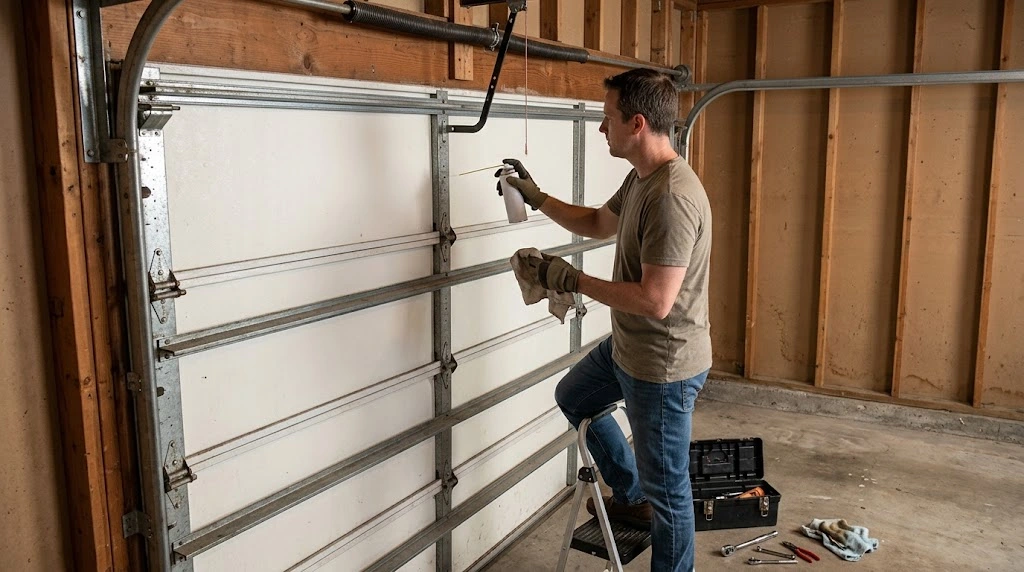
Properly lubricating a garage door means applying lithium grease to every moving part, from hinges to rollers to the opener chain, rather than spraying a single product everywhere. Skipping certain parts or using the wrong lubricant often leaves noise issues behind even after a full lubrication pass.
Lack of lubrication remains one of the most common causes of a noisy garage door, which is why garage door maintenance done the right way matters as much as doing it at all. This guide walks through exactly which parts need lubrication, what product to use, and how to apply it correctly.
Key Takeaways
- Lithium grease works best on hinges, rollers, and the torsion springs
- Cleaning each part with a damp cloth first prevents grease from trapping grit
- Over-lubricating parts leads to a greasy mess that attracts more dust
- Tracks need light lubrication only, never heavy grease along the rail
- Applying lubricant to every part in one pass prevents missed noise issues
- Consistent basic upkeep on a set schedule keeps quiet operation for longer
Lubricating Every Part of the Garage Door System
Every part of a garage door needs a slightly different approach to lubrication, and using the wrong method on the wrong part often causes more problems than it solves.
|
Part |
Lubricant to Use |
Application Method |
|
Hinges |
Lithium grease |
Direct application to hinge bolts |
|
Rollers |
Lithium grease |
Light coating on bearings, not the wheel surface |
|
Tracks |
Light lubricant or none |
Clean only, avoid heavy grease |
|
Springs |
Lithium grease |
Worked into the full coil |
|
Opener chain or belt |
Lithium grease or chain lube |
Along the entire length |
|
Lock and latch hardware |
Light oil |
Small amount in the moving joint |
Hinges
Hinges carry constant motion with every cycle, and dry hinge bolts create one of the most common squeaking sounds a garage door makes.
Here is how to lubricate the hinges:
- Wipe each hinge down with a damp cloth to remove dirt first
- Apply a small amount of lithium grease directly to the hinge bolts
- Work the grease into the joint by opening and closing the door once
- Wipe away any excess grease that drips or pools around the hinge
- Repeat this process every few months to prevent dryness from returning
To trace this exact sound back to its root cause before it spreads to other parts, read our guide on Why Is My Garage Door So Loud?, which breaks down every underlying cause behind this and other common garage door sounds in far more detail.
Rollers

Garage door rollers need lubrication at the bearing, not the outer wheel surface, since grease on the wheel itself attracts dust and debris.
The bearing needs this specific process:
- Clean each roller with a damp cloth before applying anything
- Apply lithium grease specifically to the bearing at the center of the roller
- Avoid coating the outer wheel surface where it contacts the track
- Run the door through a full cycle to work the grease into the bearing
- Check for flat spots or cracks while lubricating each roller
To match each type of noise to the fix that resolves it correctly the first time, read our guide on How to Fix a Garage Door Making Noise, which covers this exact lubrication step alongside every other common repair in more detail.
Tracks
Tracks need a different approach entirely, since grease inside the track attracts dirt and creates more friction rather than less.
Cleaning takes priority over lubricant here:
- Wipe down both tracks with a damp cloth to remove dust and debris
- Clear any spider webs or buildup collecting in the track walls
- Avoid applying heavy grease directly inside the track itself
- Use a light lubricant only if the door still scrapes after cleaning
- Check track alignment issues while cleaning for early signs of shifting
Keeping the tracks clean rather than heavily greased helps avoid the kind of buildup that can eventually lead to an off-track garage door.
Springs
Torsion springs and extension springs both need lubrication along the full coil, since dry springs create some of the loudest sounds a garage door makes.
The coil needs grease worked in this way:
- Apply lithium grease along the entire length of the coil
- Work the grease in slowly without touching the spring under load
- Avoid using excessive pressure that could shift the spring’s tension
- Wipe away any grease that drips onto nearby metal components
- Schedule a professional inspection if the spring shows any warning sign
To identify exactly which sound signals a minor issue versus a real warning sign, read our guide on What Are the Different Types of Garage Door Noises?, which breaks down each sound in far more detail.
Opener Chain or Belt
A garage door opener needs its chain or belt drive lubricated along the entire length to prevent the slapping or humming sound that comes from dry links.
Getting the chain drive right means these steps:
- Disconnect power to the garage door opener before starting
- Apply lithium grease or chain lube along the full length of the chain drive
- Check that the chain sits level and doesn’t sag below the rail
- Wipe away excess lubricant that could attract dust over time
- Test the door through several cycles to confirm quiet operation
An opener chain lubricated on a regular schedule rarely develops the ghost chain sound that comes from repeated neglect.
Lock and Latch Hardware
Lock and latch hardware needs only a small amount of light oil, since heavy grease can gum up the small moving joints.
Small joints call for this lighter approach:
- Apply a few drops of light oil directly into the moving joint
- Work the lock or latch back and forth several times after applying
- Wipe away any oil that drips onto the surrounding metal parts
- Avoid lithium grease here, since it is too thick for small joints
- Test the mechanism to confirm it moves smoothly without resistance
A latch that continues sticking after lubrication may need garage door repair rather than another lubrication attempt.
Common Lubrication Mistakes to Avoid
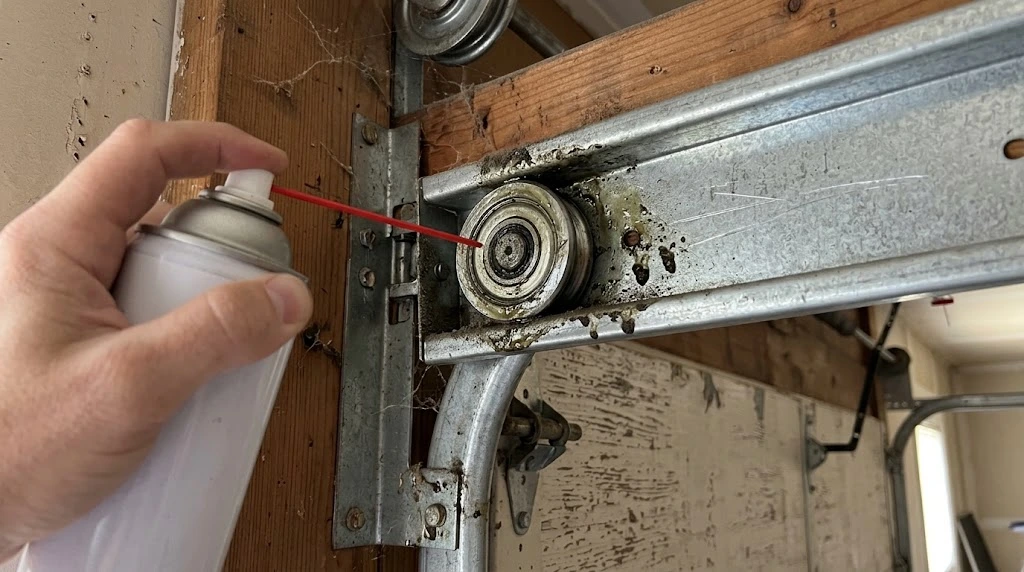
A few common mistakes turn a simple lubrication job into a bigger problem, so avoiding them the first time saves effort later.
These mistakes cause the most trouble during a lubrication pass:
- Using the wrong lubricant, like household oil instead of lithium grease
- Skipping the cleaning step and trapping dirt underneath fresh grease
- Applying too much product and creating a greasy mess that attracts dust
- Ignoring the springs entirely out of fear of touching a high-tension part
- Forgetting the opener chain, which needs the same regular attention as other parts
Avoiding these mistakes keeps the garage door system working smoothly and reduces the odds of needing garage door repair.
Proper Lubrication Is the Simplest Way to Keep a Garage Door Quiet
A garage door that receives the right lubricant in the right spots rarely develops the noise issues that come from dry moving parts left unattended for too long. Skipping certain areas or using the wrong product undoes most of the benefit, even with regular effort put into the rest of the process.
MF Solutions applies the correct lubrication technique to every part of a garage door system throughout Buffalo Grove, IL, and the surrounding areas nearby. Contact us or give us a call today, and let our trained technicians handle the parts that need extra care and attention during every visit.