

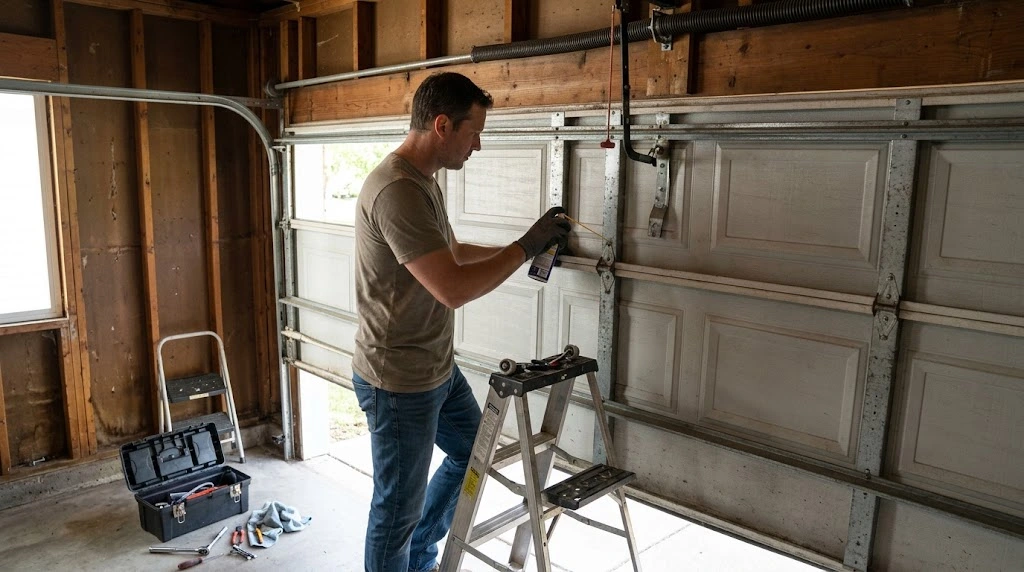
Fixing a noisy garage door means matching the exact sound to its cause, then applying the correct repair, whether that means lubrication, tightening, or a full part replacement. Basic tools resolve most of these repairs in minutes, though anything involving the spring system calls for professional expertise instead.
Garage doors that miss routine garage door maintenance are far more likely to develop a noise that returns even after a repair has already been completed. This guide walks through the specific fix for each of the most common causes behind garage door noise, covering every step along the way.
Key Takeaways
- Lithium grease resolves most squeaking and squealing within one full cycle
- A socket set tightens loose hardware and stops rattling in just a few minutes
- Worn rollers need full replacement rather than a temporary patch fix
- Realigning a shifted track stops scraping before it causes further damage
- Adjusting chain drive tension resolves most humming or slapping sounds quickly
- Spring-related noise always needs a trained technician instead of a DIY attempt
Fixes for the Most Common Causes of Garage Door Noise
Each cause behind garage door noise has a specific fix, and matching the two correctly resolves the problem the first time.
|
Cause |
Fix |
Tools Needed |
|
Dry moving parts |
Apply lithium grease |
Grease, damp cloth |
|
Loose hardware |
Tighten bolts and brackets |
Socket set |
|
Worn rollers |
Replace with new rollers |
Nylon rollers, wrench |
|
Misaligned track |
Realign the track |
Level, wrench |
|
Loose chain or belt |
Adjust tension |
Wrench, manufacturer spec |
|
Spring issues |
Professional replacement |
Winding bars (professional use only) |
Lubricating Dry Moving Parts
Dry hinges, rollers, and springs respond quickly to the right lubricant applied in the right spots, especially when the noise has just started.
Here is how to resolve the squeaking through proper lubrication:
- Wipe down each part with a damp cloth before applying anything
- Apply lithium grease directly to hinge bolts and roller bearings
- Work the grease into the torsion springs along the full coil
- Run the door through a full cycle to spread the lubricant evenly
- Repeat this process every few months to prevent dryness from returning
To weigh this exact fix against tightening hardware and other common repairs, read our guide on Why Is My Garage Door So Loud?, which breaks down every cause behind these sounds in more detail.
Tightening Loose Hardware

Loose mounting brackets, hinge bolts, and lag screws create most of the rattling a garage door produces, especially after months of daily use.
These steps stop the rattling for good:
- Run the door through one cycle first to locate the loose spot
- Use a socket set to tighten every visible bolt and screw
- Check lag screws holding the track to the frame specifically
- Avoid overtightening, which can crack the surrounding metal components
- Test the door again to confirm the rattling has actually stopped
A quick pass with a socket set on every bracket usually resolves most loose hardware within just a few minutes, start to finish.
Replacing Worn Rollers
Rollers with flat spots or visible cracks need full replacement rather than a temporary fix, especially once the grinding noise starts to worsen.
Replacing a worn roller takes these steps:
- Disconnect the garage door opener before starting any roller work
- Remove the roller bracket holding the damaged roller in place
- Slide the old roller out and the new nylon roller in one at a time
- Reattach the roller bracket and confirm it sits flush against the track
- Test the door through a full cycle to check for smooth movement
To match each type of noise to a different fix like this one, read our guide on What Are the Different Types of Garage Door Noises?, which breaks down every sound and its solution in more detail.
Realigning a Shifted Track
A bent or shifted track needs correction before the scraping causes further damage to nearby rollers and brackets that sit close to the frame.
Correcting the alignment involves these steps:
- Loosen the mounting brackets holding the track in place
- Use a level to check the track’s alignment against the frame
- Gently tap the track back into proper position with a rubber mallet
- Retighten the mounting brackets once the track sits level
- Run the door through a full cycle to confirm the scraping has stopped
Special attention to track alignment during this process helps prevent an off-track garage door situation from happening again later on.
Adjusting a Loose Chain or Belt
A sagging chain or a belt drive missing tension usually just needs proper adjustment, especially on a system that sees daily use.
Removing the slack takes just a few steps:
- Locate the tension adjustment bolt near the opener chain
- Turn the bolt gradually to remove the slack in the chain or belt
- Check the chain drive sits level and doesn’t sag below the rail
- Apply lithium grease to the chain if it looks dry
- Test the door through several cycles to confirm the sound is gone
Adjusting the chain to the correct spec on a garage door opener resolves most humming or slapping sounds right away.
Handling Spring-Related Noise
A loud bang or pop from the spring area needs professional repair, since the extreme tension involved makes hand tools unsafe for a DIY attempt.
Here is what happens during a professional fix:
- A trained technician inspects the spring for visible damage or wear
- Winding bars release the extreme tension stored in the coil safely
- The damaged spring gets removed and replaced with a matching one
- The full garage door system gets tested through several cycles
- The technician checks the opener for any strain from the bad spring
To prevent spring strain with the right maintenance routine, read our guide on How to Properly Lubricate a Garage Door to Prevent Noise, which covers the maintenance steps that address most issues before they reach this point.
When a Repair Needs a Trained Technician
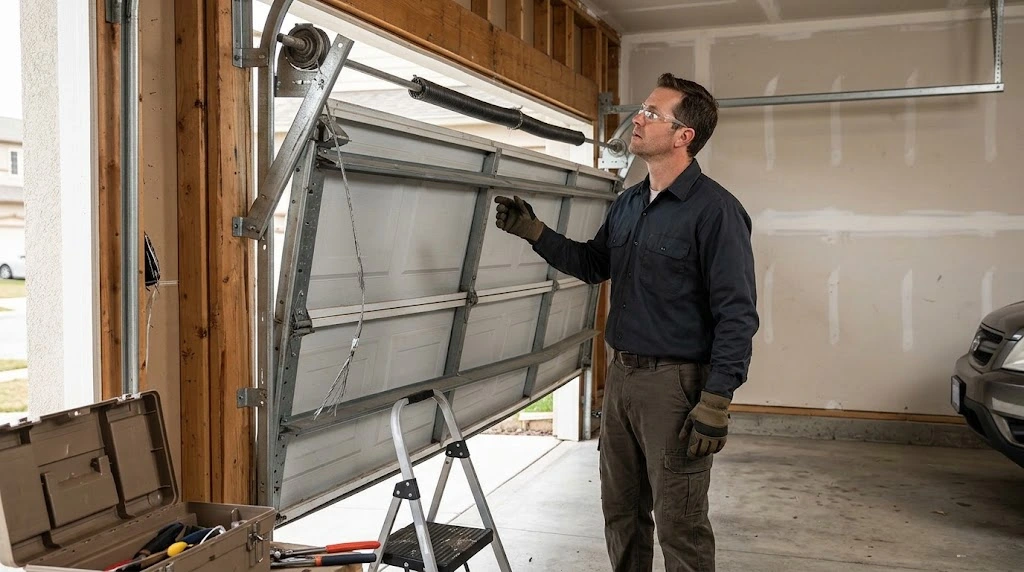
Basic garage door fixes stay within reach for most homeowners, but a few situations call for a trained technician right away.
These situations always need professional garage door repair:
- Any noise involving the torsion springs or extension springs
- A door that jumps off the track or hangs unevenly
- Frayed cables showing visible wear near the connection points
- A door that suddenly stops mid-cycle without warning
- Uncertainty about which part is actually causing the noise
Calling a professional for these specific situations avoids the serious injury risk that comes with handling high-tension parts alone.
The Right Fix Depends on the Exact Cause of the Noise
A noisy garage door almost always responds well to a fix once the exact cause gets identified correctly and matched to the right tool or technique for the job. Simple tools handle most repairs on the spot, while spring and cable issues always belong with a trained professional instead of a DIY attempt.
MF Solutions applies the correct fix for every type of garage door noise reported throughout Buffalo Grove, IL, and the surrounding areas nearby, no matter the cause. Contact us or give us a call today, and let our trained technicians resolve the issue safely, correctly, and on the very first visit every time.