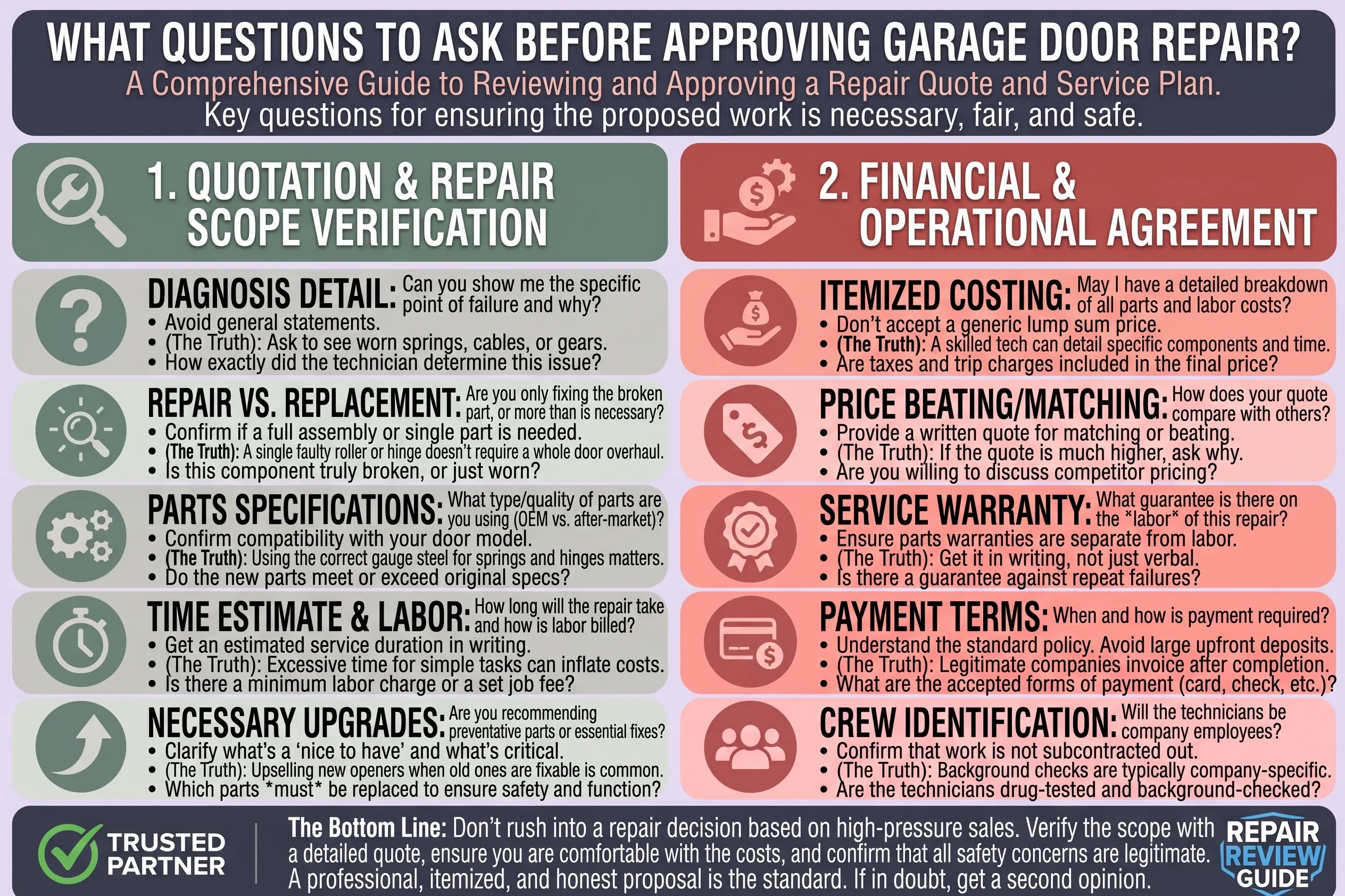


Confirming that a real diagnosis took place matters because homeowners otherwise have no way to check a technician’s claim once the repair is finished. A garage door repair invoice alone doesn’t show whether any actual testing happened, so proof of that testing is the only real safeguard against an inflated or inaccurate bill.
A specific set of signs, confirmed through physical testing instead of a quick glance, separates documented findings from a guess made at the door. This guide walks through what to look for, what to ask, and which red flags suggest the testing never happened, so homeowners know what to expect before approving any repair.
Key Takeaways
- A real diagnosis includes a physical inspection of springs, cables, rollers, and tracks.
- Operational tests like manual balance checks confirm findings beyond a visual glance.
- Technicians should show the damaged part and explain the cause in plain terms.
- Documented findings, including photos or measurements, support the diagnosis given.
- A clear, itemized options list separates urgent repairs from work that can wait.
How Can Homeowners Verify a Real Diagnosis Took Place?
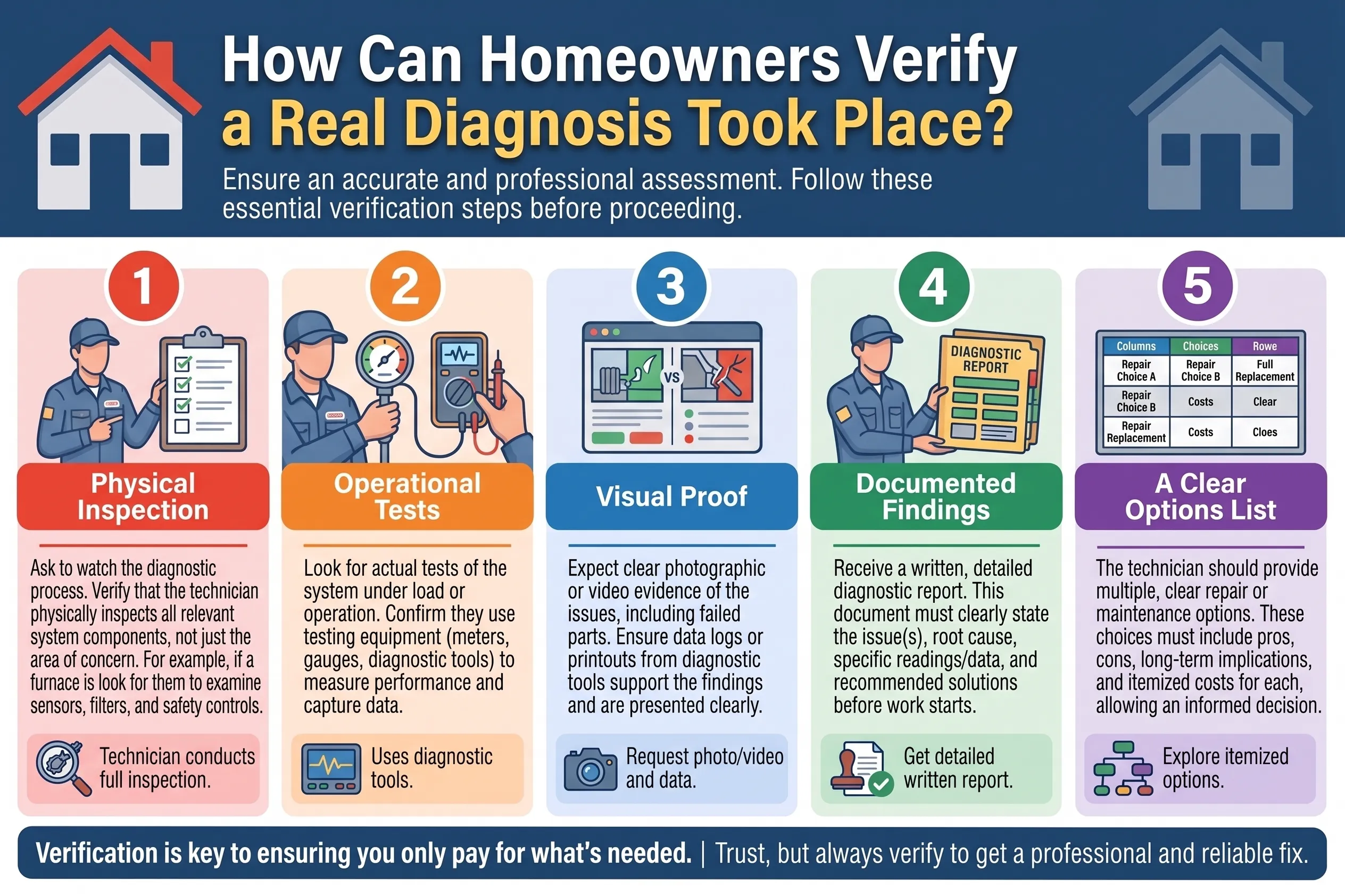
Proof of a real diagnosis comes down to checking for a specific set of actions a technician should complete before naming a cause.
Verification Step | What to Look For | Why It Matters |
Physical Inspection | Springs, cables, rollers, and tracks checked by hand | Confirms the technician examined the full system, not just the symptom |
Operational Tests | Manual balance check and safety sensor testing | Reveals functional issues beyond what a visual check alone shows |
Visual Proof | The damaged part shown directly, with a plain explanation | Confirms the diagnosis points to a real, verifiable cause |
Documented Findings | Photos, measurements, or written observations | Creates a record the homeowner can reference later |
A Clear Options List | Urgent versus non-urgent work, with itemized pricing | Shows the diagnosis led to a real plan, not just a repair pitch |
Checked against each other, these five steps give homeowners a much stronger position before approving any repair or signing off on a total.
Physical Inspection
Core components like garage door springs, cables, and rollers should get checked by hand before any technician names a cause.
A thorough physical inspection typically covers:
- Both torsion or extension springs checked for gaps, rust, or breaks.
- Lifting cables on both sides examined for fraying or looseness.
- Rollers tested for free movement and tracks checked for bends.
- The opener’s motor unit, gear, and power connection inspected directly.
- Loose hardware identified and noted before any repair begins.
Without this physical step, diagnosis almost always rests on assumption rather than evidence, leaving the actual cause unconfirmed until something fails again.
Operational Tests
Functional testing confirms whether the garage door system performs as it should under normal use, beyond what a visual check alone reveals.
These tests uncover issues a visual inspection alone would miss:
- The emergency release cord is pulled to test the door manually.
- The door lifted halfway by hand to check balance and weight.
- Photo-eye sensors tested to confirm they reverse the door correctly.
- Signal interference ruled out as a cause of erratic behavior.
- The door’s full range of motion was observed for resistance or noise.
Homeowners gain real confidence in a diagnosis once these operational tests confirm how the door performs, not just how it looks.
Visual Proof of the Problem
A homeowner deserves more than a verbal claim, and comparing what’s shown against documented testing expectations clarifies what proof should look like.
Real visual proof typically includes:
- Direct pointing to the exact worn, cracked, or broken component.
- A plain-language explanation of why that specific part failed.
- Context distinguishing normal wear from a manufacturing defect.
- A comparison to what a functioning part should look like.
- Time to ask questions about the part before replacing it.
To understand exactly what happens when this step gets bypassed entirely, read our guide on Why Is Diagnosis Needed Before a Garage Door Repair?, which breaks down the consequences of an unverified diagnosis.
Documented Findings
Paperwork tells its own story, and checking it against common industry practice reveals whether the notes actually support the diagnosis given.
Proper documentation tends to include:
- Specific measurements taken during the inspection process.
- Photos of the damaged component, taken before any repair work.
- Written observations noting exactly what the technician found.
- A record homeowners can reference if a dispute arises later.
- Notes that match the verbal explanation given on-site.
To trace exactly what happens when this documentation goes missing, read our guide on What Happens When Garage Door Repair Skips Diagnosis?, which covers the financial and safety fallout that follows.
A Clear Options List
Urgent repairs and work that can wait get sorted out through a clear garage door maintenance breakdown, not a single bundled recommendation.
A clear options list typically breaks down into:
- Which repairs need immediate attention versus which can wait.
- Transparent, itemized pricing for each proposed repair.
- Plain-language reasoning behind each recommendation given.
- Options presented without pressure to approve everything at once.
- A written estimate provided before any tools come out.
To walk through the exact questions worth asking before approving anything on this list, read our guide on Questions to Ask Before Approving Garage Door Repair, which covers what a homeowner should confirm first.
What to Do If a Diagnosis Feels Incomplete?
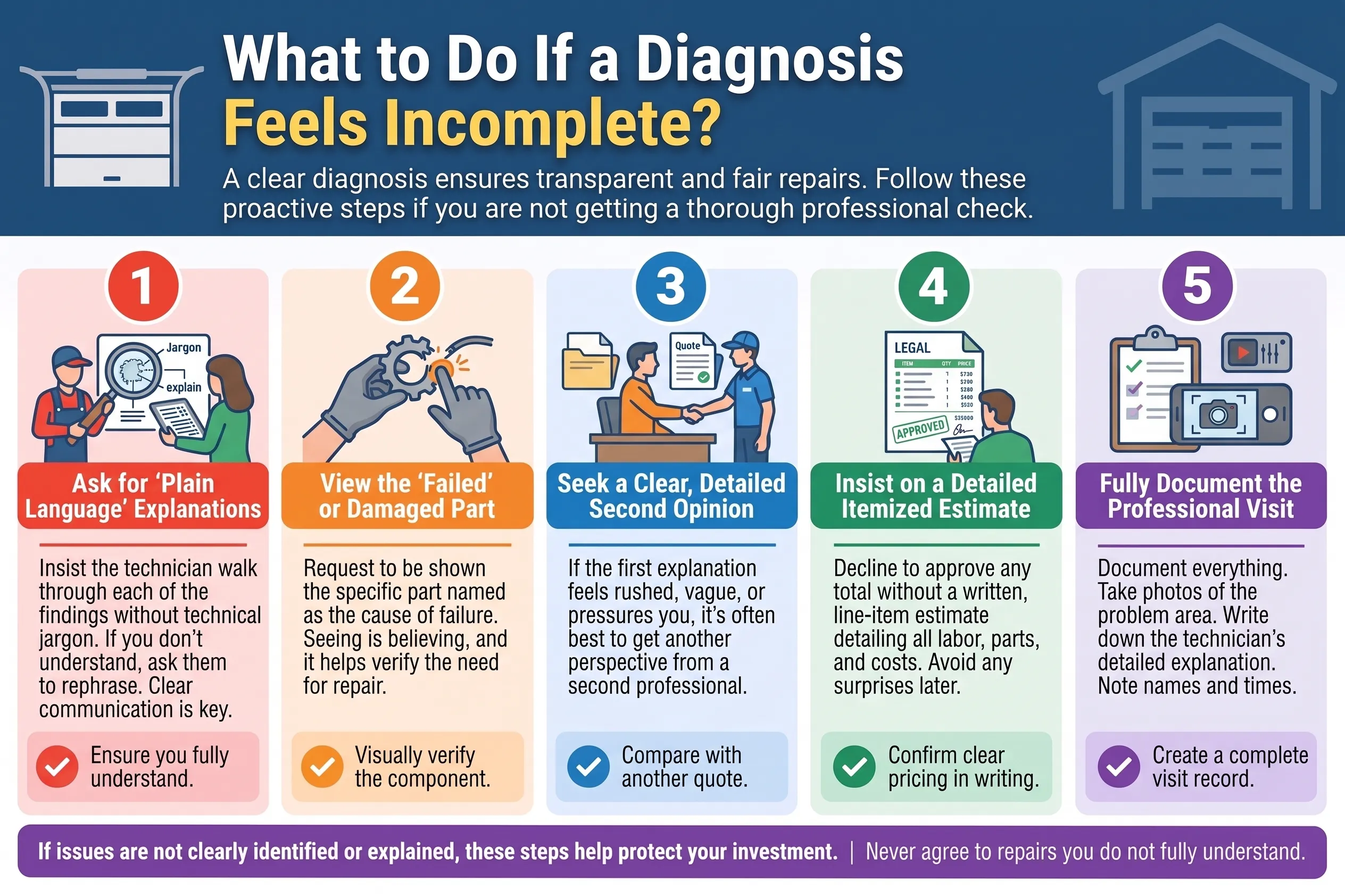
Time pressure during garage door emergencies can rush this verification process, but a legitimate technician should still welcome questions, even on a tight schedule.
A few steps help when something feels off:
- Ask the technician to walk through each finding in plain language.
- Request to see the specific part named as the cause of failure.
- Get a second opinion if the explanation still feels vague or rushed.
- Decline to approve any total without a written, itemized estimate.
- Document the visit, including photos and the technician’s explanation.
Repairs built on a rushed or vague diagnosis rarely hold up once the door gets used again, often failing within the same season.
A Documented Diagnosis Is the Only One Worth Trusting
Diagnosis backed by evidence, whether photos, measurements, or a plain-language explanation, gives homeowners something to verify instead of something to simply accept. Confirming these steps helps protect you from paying for repairs that never address the real problem.
MF Solutions documents every step of the diagnostic process for homeowners throughout Buffalo Grove, IL, walking through each finding carefully before approving any repair. Contact us or give us a call today, and let our trained team show their work clearly before any repair begins.