

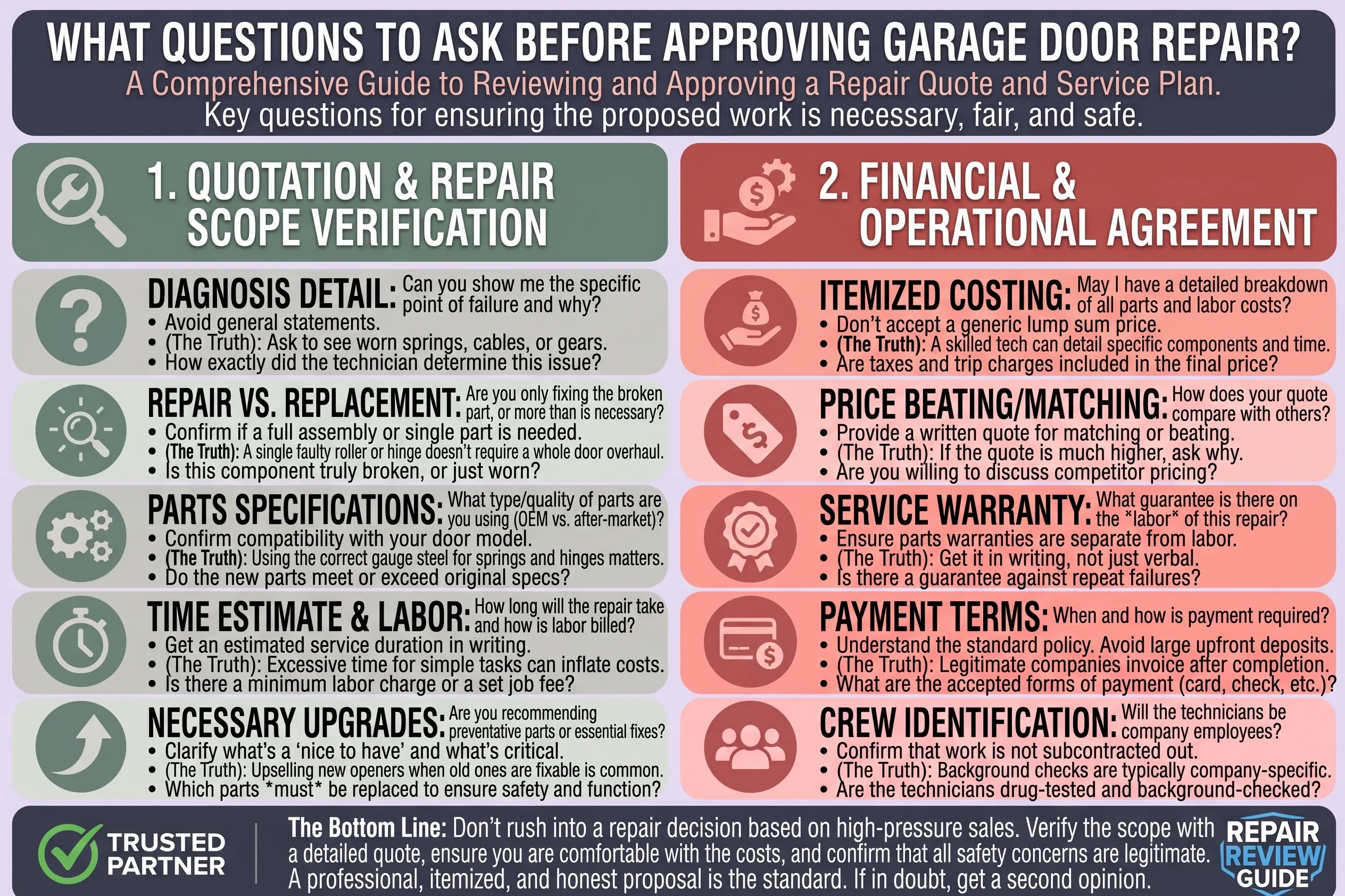
Approving a garage door repair without asking the right questions first often means accepting whatever a technician says at face value, even when the explanation feels incomplete. Specific, targeted questions give homeowners leverage over pricing, part quality, and the accuracy of the diagnosis itself.
Five categories of questions cover nearly everything worth confirming before signing off on any repair, from the first phone call through the final invoice. This guide breaks down exactly what to ask, why each question matters, and what a vague or evasive answer might actually signal about the company.
Key Takeaways
- Diagnosis questions confirm the exact cause before any repair work begins.
- Pricing questions protect against hidden fees and inflated final invoices.
- Parts questions reveal whether the company is installing quality components.
- Warranty questions confirm coverage exists on both parts and labor.
- Credential questions verify the company is licensed, bonded, and insured.
What Should Homeowners Ask Before Signing Off on a Repair?
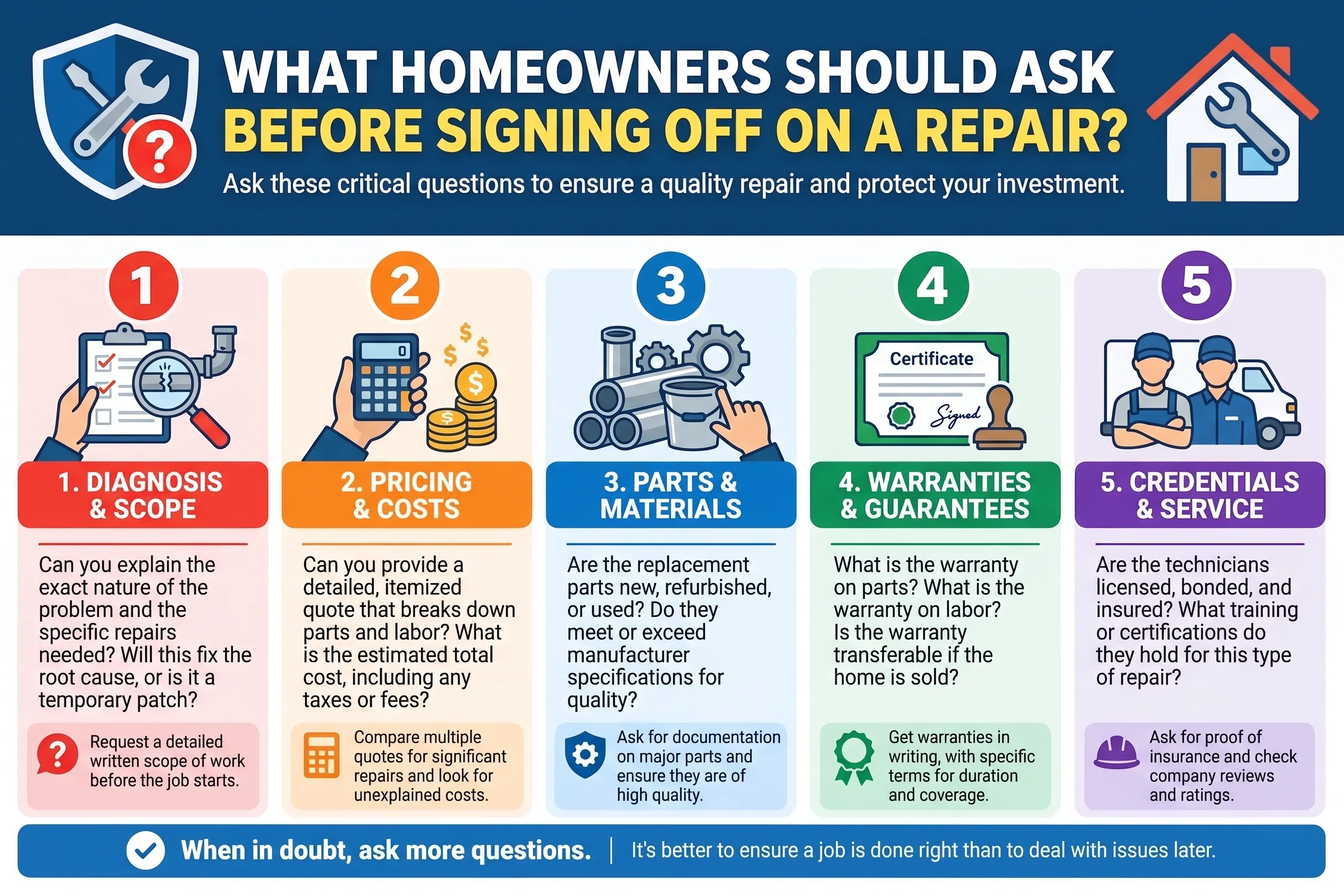
Five question categories give a complete picture before approving any garage door work, covering everything from the diagnosis to the paperwork.
|
Question Category |
What to Ask |
Why It Matters |
|
Diagnosis and Scope |
What caused the problem, and are other parts affected |
Confirms the repair addresses the real issue, not just a symptom |
|
Pricing and Costs |
Is the estimate detailed, guaranteed, and free of hidden fees |
Protects against surprise charges once work begins |
|
Parts and Materials |
What brand and lifespan do the replacement parts carry |
Confirms quality matches what is being paid for |
|
Warranties and Guarantees |
Do parts and labor both carry written coverage |
Protects against paying twice for the same failure |
|
Technician and Company Credentials |
Is the company licensed, bonded, and insured |
Confirms legal accountability if something goes wrong |
Working through each category before approving anything protects both the budget and the repair outcome, especially once real money is on the line.
Diagnosis and Scope
Confirming the exact cause of the problem gives a foundation for every other question that follows, since nothing else can be verified until this one is settled.
These questions clarify what the technician actually found:
- What is the exact cause of the current problem? Naming the specific part or mechanism confirms the technician tested rather than guessed.
- Are there other worn parts that need immediate attention? This reveals whether the visit covered the full system or just the obvious symptom.
- Do both springs need replacement if only one broke? Springs typically share the same lifespan, so this question checks for consistent, sound reasoning.
- Why does this specific repair address the root cause? A clear answer connects the diagnosis directly to the proposed fix.
- What happens if this repair gets delayed a few weeks? The answer reveals how urgent the issue actually is, beyond a sales pitch.
Clear answers early prevent confusion once pricing and parts enter the conversation, saving time at every step.
Pricing and Costs
Costs tied to garage door installation or repair can spiral quickly when hidden fees creep into an estimate that seemed reasonable at first glance.
These questions keep pricing transparent from the start:
- Can I get a detailed, written estimate breaking down parts and labor? This creates a reference point to check against the final invoice.
- Is this price guaranteed to match the final invoice? A yes here protects against a surprise total once work begins.
- Are there hidden or extra fees, such as diagnostic or service charges? Naming these upfront avoids confusion at payment time.
- Will you call for approval before installing any extra-cost parts? This confirms no charges get added without direct consent.
- What happens if the actual repair costs more than quoted? The answer shows how the company handles unexpected complications.
To understand exactly why these pricing questions matter so much before any work begins, read our guide on Why Is Diagnosis Needed Before a Garage Door Repair?, which breaks down how an accurate diagnosis leads to an accurate estimate.
Parts and Materials
Verifying whether quality matches the price starts with checking the manufacturer specifications for any replacement part.
These questions confirm what is actually being installed:
- What brand and quality of parts or springs are being installed? Recognizable branding usually signals a documented, traceable product.
- What is the expected lifespan or cycle rating of new springs? This number indicates how long the repair should reasonably last.
- Are the parts new, or refurbished without disclosure? Undisclosed refurbished parts can significantly shorten the expected lifespan.
- Do the parts carry manufacturer branding and documentation? Documentation supports any future warranty claim tied to the part.
- How do these parts compare to what was originally installed? This comparison confirms the replacement matches or improves on the original.
To trace exactly what happens when unnecessary parts get installed instead of addressing the real cause, read our guide on What Happens When Garage Door Repair Skips Diagnosis?, which covers the financial fallout of that mistake.
Warranties and Guarantees
Fixes involving garage door sensor repair or other components should always come with written coverage, not just a verbal promise.
These questions confirm coverage actually exists:
- Is there a warranty on the parts, and how long does it last? Duration varies widely, so getting a specific number matters.
- Is there a written warranty on the labor? Verbal promises rarely hold up if a dispute happens later.
- What voids the warranty if something goes wrong later? Knowing the conditions upfront helps you avoid losing coverage without realizing it.
- Does the warranty transfer if the home gets sold? This affects resale value and protects future buyers.
- Who handles a warranty claim if a part fails again? A clear point of contact speeds up any future claim.
Coverage that exists only verbally holds up poorly once a dispute actually arises, leaving the homeowner with little recourse beyond a technician’s word.
Technician and Company Credentials
Checking a technician’s credentials against documented licensing requirements gives homeowners a clear standard to verify against.
These questions confirm legitimate business standing:
- Are you fully licensed, bonded, and insured for this work? This confirms legal accountability if something goes wrong.
- Can you provide proof of licensing before starting the repair? A company confident in its status shares this without hesitation.
- What happens if property damage occurs during the repair? Insurance coverage should address this scenario directly.
- How many years of experience does your technician carry? Experience often correlates with more accurate, efficient diagnosis.
- Can I verify your business registration independently? An independent check confirms the company is not operating under a false name.
To walk through exactly how a homeowner verifies these credentials firsthand, read our guide on How to Confirm a Diagnosis Happened in Garage Door Repair, which covers the documentation worth requesting on-site.
What Happens After These Questions Get Answered?
Time to ask every question can get short during garage door emergencies, but the core ones still deserve a direct answer before approval.
A next step follows once these questions get answered:
- Compare the answers against a second technician’s quote if anything feels off.
- Request the written estimate and warranty terms in one document.
- Confirm the scheduled repair date and expected timeline in writing.
- Keep a copy of every answer for reference after the repair.
- Approve the work only once every question receives a clear response.
Clear answers to every question turn an uncertain repair decision into a confident, informed one, backed by documentation instead of a technician’s word alone.
The Right Questions Protect Every Garage Door Repair Decision
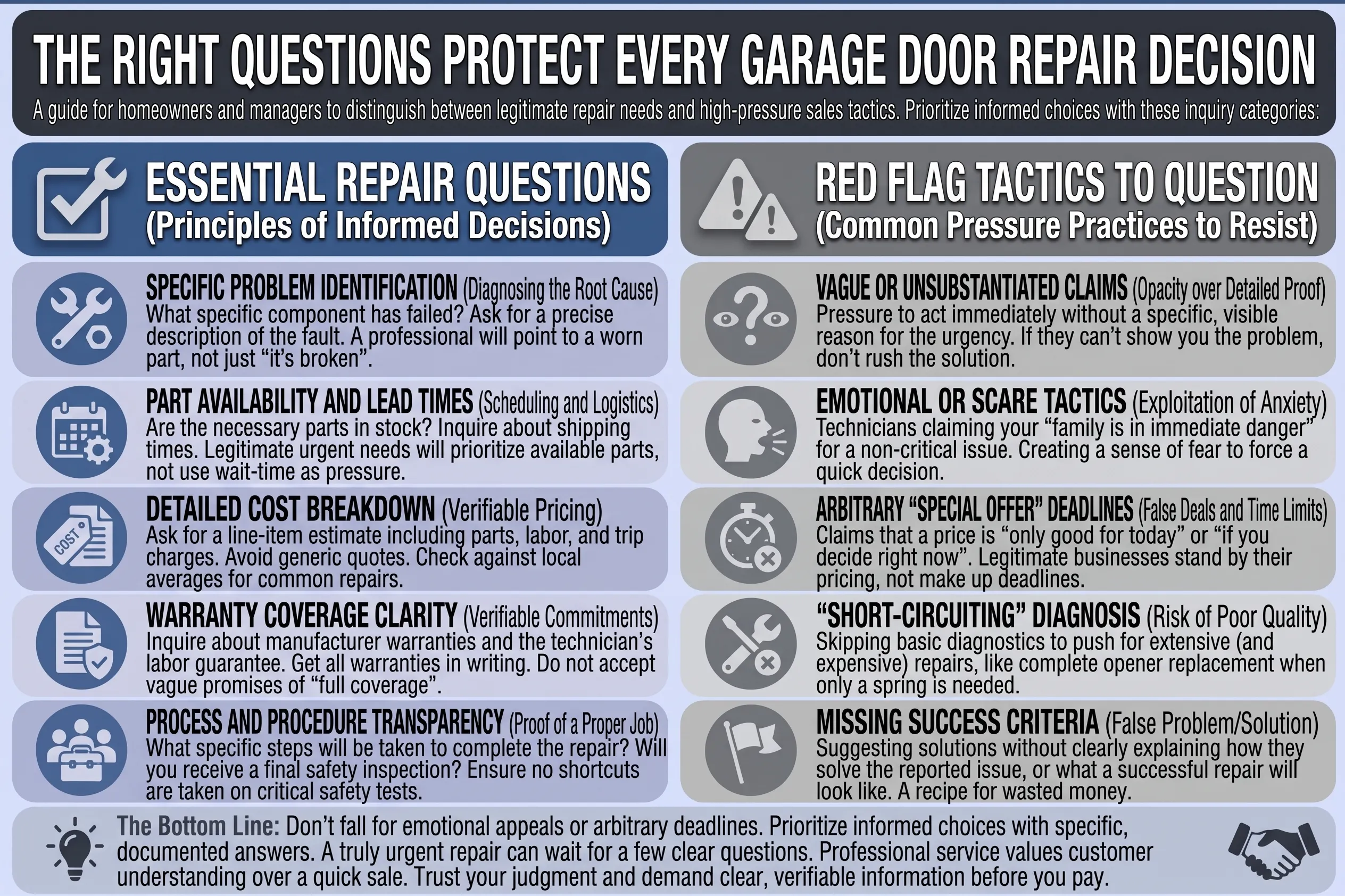
Asking about diagnosis, pricing, parts, warranties, and credentials before approving anything protects both your budget and the safety of everyone using the door daily. Vague or evasive answers deserve a second opinion before any work begins, especially when real money and safety are both on the line.
MF Solutions welcomes these questions from homeowners throughout Buffalo Grove, IL, before approving any repair, no matter how small or urgent the job seems, since every detail deserves a clear answer. Contact us or give us a call today, and let our trained team answer each one clearly before work begins.


