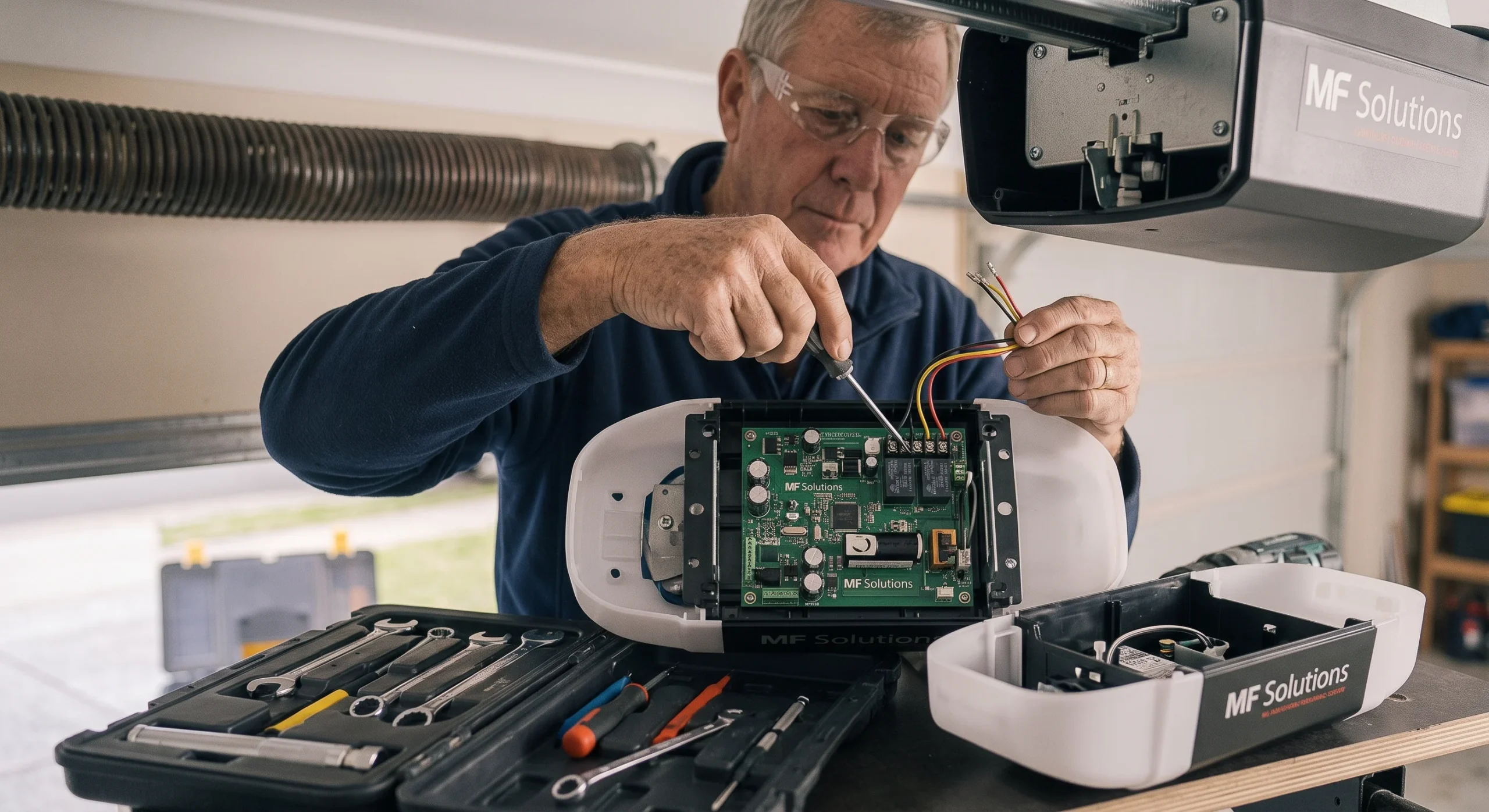
Garage door opener parts do not fail all at once, and the system will show clear warning signs well before it stops working completely. Those warning signs are not random occurrences but direct indicators that one or more components inside the opener are beginning to break down.
Recognizing these signs early is what separates a minor repair from a costly full system replacement. This guide breaks down every sign of failing garage door opener parts, explains what each sign means for the system’s overall health, and helps determine when professional attention is needed.
What Makes Garage Door Opener Parts Start Showing Warning Signs
Garage door opener parts do not break down without a reason, and the stress from hundreds of daily cycles gradually wears down every component responsible for keeping the system running.
Common reasons garage door opener parts start showing warning signs include:
- The garage door motor loses efficiency and struggles to lift the door
- Extreme temperature changes accelerate wear on metal drive components
- Lack of lubrication on the trolley, carriage, and sprockets speeds up part wear
- Aging electronic components, like the circuit board, lose signal accuracy
- Worn garage door hardware overloads the opener and forces it to compensate
To understand which specific components are most vulnerable to this kind of wear, read our guide on What Are the Most Common Garage Door Opener Parts to Replace?, which covers the exact parts that break down most often in Buffalo Grove, IL homes.
Common Signs That Garage Door Opener Parts Need Replacement
Key Operational Signs
Mechanical stress on garage door opener parts shows up as clear performance changes during everyday use.
Common operational signs include:
- Grinding or rattling during operation points to worn motor gears or poor lubrication
- A delay after pressing the remote suggests a failing logic board
- A door that stops midway or reverses suddenly points to a worn trolley or limit switch
- A running motor paired with a stationary door means the drive gear has failed
- Jerky movement along the track indicates the drive system is losing power output
Operational changes that repeat across multiple cycles confirm that internal components need replacement.
Electrical and Safety Signs
Electrical and safety failures carry some of the most serious consequences for the entire opener system.
Signs to look out for include:
- Crushing objects instead of reversing means sensors or force settings failed
- Unprompted door movement points to a deteriorating circuit board
- Decreased remote range signals a failing logic board or damaged antenna
- Motor tripping the breaker or flickering lights signal excessive power draw
- Burning smells or a non-stop motor indicate overheating or a failed limit switch
Electrical symptoms during every cycle signal internal failure that may require a garage door emergency inspection.
Physical Wear and Tear Signs
Visible deterioration on the door and opener components is direct evidence that replacement parts are needed.
Physical indicators to check for include:
- Sagging door sections strain the motor and drive system unevenly
- Rust or corrosion on opener components confirms prolonged moisture exposure
- Bent tracks or damaged rollers cause the door to bind during every cycle
- Loose hardware around the opener mount weakens the connection to the overhead door
- Excessive shaking or vibration signals an alignment problem that overworks the motor
Physical damage that affects how the door moves directly impacts the lifespan of every connected opener part.
What to Do After Spotting Warning Signs on Garage Door Opener Parts
Warning signs on garage door opener parts require immediate attention to prevent further damage to the system.
Steps to take after spotting warning signs:
- Check the keypad and remote for dead batteries, physical damage, or connectivity issues
- Inspect the photo eyes and safety sensors for dirt, misalignment, or visible damage
- Note whether the noise comes from the motor, track, or drive system
- Document when the warning sign first appeared and whether it is getting more frequent
- Contact a professional for garage door repair when basic checks do not resolve the issue
To learn how to keep opener parts in good condition long term, read our full article on Maintaining Garage Door Opener Parts to Avoid Replacement, which covers the habits and inspections that extend the life of every component.
Why Garage Door Opener Replacement Is a Job for the Professionals
Replacing garage door opener parts involves mechanical tension, electrical wiring, and compatibility issues that require professional training.
Reasons to leave garage door opener replacement to the professionals:
- Misidentifying the opener model leads to purchasing incompatible OEM parts
- Incorrect circuit board installation can permanently damage the opener
- Garage door spring tension can cause serious injury without proper tools
- Professionals cover the trolley, carriage, limit switches, and overhead door hardware
- Brands like LiftMaster, Chamberlain, and Genie require model-specific parts and calibration
To explore the root causes of these failures, read our guide on Why Garage Door Opener Parts Need Replacement, which covers the factors that drive the need for professional intervention.

How Much Does It Cost to Replace Garage Door Opener Parts
Replacement costs for garage door opener parts vary based on several factors that affect both part prices and labor.
Factors that influence the cost of garage door opener parts replacement:
- Opener brand like LiftMaster, Chamberlain, or Genie determines parts availability and pricing
- OEM parts for a specific opener model cost more than universal alternatives
- Drive system type, such as chain drives or screw drives, affects component pricing
- The extent of damage determines whether one part or multiple components need replacement
- Local labor rates in Buffalo Grove, IL, factor into the total cost
Getting a professional assessment is the most accurate way to determine the actual cost before committing to any repair or replacement.
Get the Help You Need When Garage Door Opener Parts Start Failing
Garage door opener parts communicate failure through sounds, delays, and performance changes that become more noticeable over time. Recognizing these signs early gives homeowners the upper hand in addressing problems before the entire system breaks down.
MF Solutions provides honest inspections, accurate diagnostics, and professional garage door service to homeowners across Buffalo Grove, IL. Contact us or give us a call today, and let our team assess what your system needs before a warning sign turns into a complete opener failure.