
Regular maintenance on garage door opener parts is what separates a system that lasts for many years from one that breaks down and demands costly replacement ahead of schedule. Skipping that maintenance puts every component under increasing stress until something fails completely.
Knowing which parts wear the fastest and when professional attention is needed gives any homeowner a real advantage in avoiding premature replacement. This guide covers everything needed to maintain garage door opener parts the right way and keep the entire system running at full capacity.
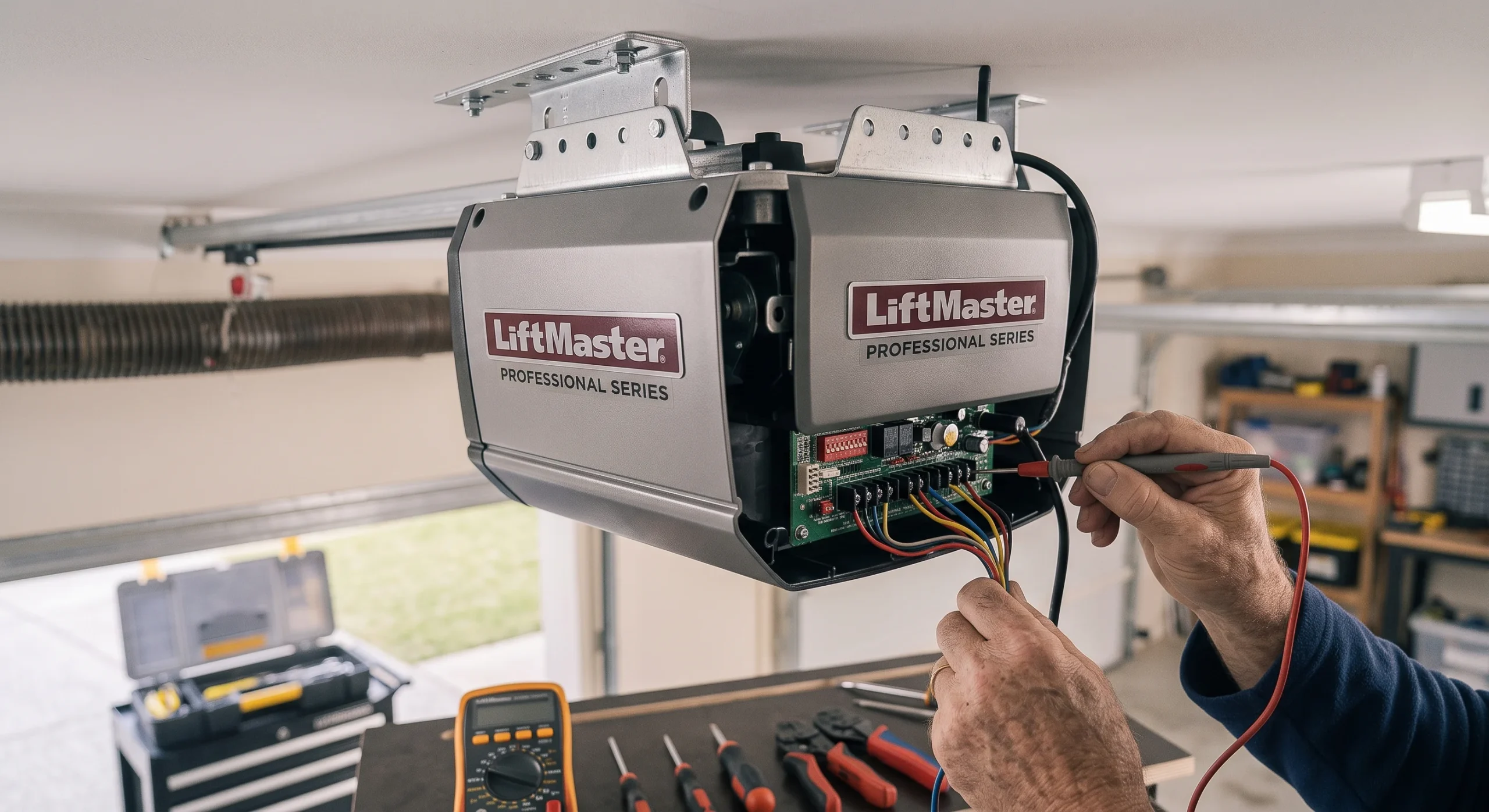
Why Maintaining Garage Door Opener Parts Helps Avoid Costly Replacement
Garage door opener parts are built for thousands of cycles, but that durability depends entirely on the care those parts receive over time, and without it, even the strongest components wear down faster than expected.
Common ways maintenance prevents costly replacement:
- Lubrication reduces friction and slows wear on moving parts.
- Tightening hardware prevents mechanical drift and motor strain.
- Clean tracks reduce resistance on the drive system.
- Sensor testing catches calibration issues before they escalate.
- Spring inspections identify fatigue before a sudden failure occurs.
To understand what happens when these parts are pushed past their limits, read our guide on What Are the Most Common Garage Door Opener Parts to Replace?, which covers the exact components that fail most often in Buffalo Grove, IL homes.
Garage Door Opener Parts That Require the Most Maintenance
Consistent garage door maintenance starts with knowing which garage door opener parts carry the most load and wear down the fastest.
Part | Why It Needs Maintenance |
Drive Belts, Chains, and Sprockets | Collect debris and lose tension without regular cleaning and lubrication |
Gears and Gear Kits | Grind down over time and need inspection before wear reaches the motor |
Safety Sensors and Photo Eyes | Shift out of alignment and collect dust that disrupts the safety beam |
Remote Controls, Keypads, and Batteries | Corrode and lose signal accuracy without routine checks |
Wall Consoles and Control Panels | Exposed to daily use and need cleaning to keep buttons and connections responsive |
Logic Board and Motor Unit | Require professional inspection to catch early faults before full failure |
Trolley and Carriage Assembly | Endure constant movement and need lubrication to prevent binding along the drive rail |
Paying attention to these parts on a consistent basis is what keeps the entire garage door opener system performing at full capacity.
What Happens to Garage Door Opener Parts Without Regular Maintenance
Garage door opener parts that go without regular maintenance accumulate wear at a rate that leads to failure faster than most homeowners expect.
What happens to garage door opener parts without regular maintenance:
- Metal components wear down faster without lubrication between moving parts.
- Loose hardware causes mechanical drift that misaligns the door and strains the motor.
- Dirty tracks and rollers force the drive system beyond its intended load.
- Neglected sensors and limit switches fail silently and compromise the entire system.
- Worn springs and cables reach their breaking point without any prior warning.
To get a full picture of what drives these failures, read our guide on Why Garage Door Opener Parts Need Replacement, which breaks down the most common causes behind part deterioration.
Proven Maintenance Strategies to Extend the Life of Garage Door Opener Parts
Lubricating Moving Parts Properly
Friction is the leading cause of premature wear on garage door opener parts, and proper lubrication is what keeps that friction under control.
Key lubrication practices to follow:
- Apply white lithium grease or silicone-based lubricant to hinges and roller stems.
- Chain drives and screw drive carriages need lubrication along the full drive rail.
- Never spray lubricant inside the tracks as it attracts debris and causes binding.
- WD-40 strips existing grease rather than protecting metal surfaces.
- Lubricate all moving parts at least twice a year.
Every moving part performs better and lasts longer when the right lubricant is applied consistently.
Tightening Hardware and Fasteners
Vibration from thousands of cycles gradually loosens every bolt, nut, and screw across the garage door system.
Hardware areas that need regular tightening:
- Hinges and track bracket bolts loosen first from constant movement.
- Opener rail and ceiling bracket fasteners need checking every few months.
- Loose trolley screws cause the carriage to shift and create uneven travel.
- Loose track mounting bolts allow the garage door track to flex and pull rollers out of alignment.
- A socket wrench keeps every connection firm and properly seated.
Consistent tightening keeps mechanical stress evenly distributed across every connected garage door part.
Keeping Tracks and Rollers Clean
Debris and grease buildup inside the garage door track adds resistance that forces the opener motor to work harder than its design allows.
Practical steps for keeping tracks and rollers clean:
- Wipe vertical and horizontal tracks with a damp cloth to remove dust and debris.
- Inspect rollers for chips, cracks, or flat spots that disrupt smooth travel.
- Check tracks for dents or bends that force rollers off their path.
- Nylon rollers still benefit from a monthly visual check.
- Remove hardened grease before applying a fresh coat of lubricant.
Dirty tracks and worn rollers are among the leading causes of an off-track garage door, and regular cleaning keeps both components moving the way they should.
Testing the Safety Sensors and Auto Reverse Feature
Photo eyes and the auto reverse mechanism are the two most critical safety components on any automatic garage door opener.
Steps for testing sensors and auto reverse:
- Wipe sensor lenses and confirm LED indicator lights are solid on both units.
- Confirm garage door opener sensors are aimed at each other with no obstruction.
- Place a flat board in the door’s path to test the auto reverse response.
- Blinking sensors need realignment before the door is operated again.
- Limit switches that allow travel past the stop point need professional adjustment.
Properly functioning sensors and a responsive auto reverse keep the system operating within its designed parameters.
Checking the Door Balance
An unbalanced overhead door places disproportionate weight on the opener motor and accelerates wear across the drive system.
How to check and assess door balance:
- Pull the manual release cord to disconnect the door from the opener.
- Lift the door manually to the halfway point and release to check if it holds position.
- A door that falls or rises indicates garage door spring tension needs professional adjustment.
- Unbalanced doors wear down the trolley, carriage, and drive components faster.
- Perform balance checks twice a year to catch spring fatigue early.
Door balance directly affects how long garage door opener parts last, and ignoring it leads to garage door repair that regular checks could have prevented.
Testing the Battery Backup
Openers equipped with a battery backup need periodic testing to confirm the system works when power is lost.
Battery backup testing steps to follow:
- Unplug the opener from the wall outlet to simulate a full power outage.
- Operate the door using the remote control to confirm the backup battery works.
- A warning light or unresponsive door means the backup battery needs replacement.
- Buffalo Grove, IL winter storms make a functional battery backup especially valuable.
- Replace backup batteries proactively every one to two years.
A working battery backup keeps the garage door operational and protects electronic components from sudden power loss.
How Often Should Garage Door Opener Parts Be Maintained
Garage door opener parts wear at different rates, and a structured maintenance schedule is what keeps every component covered without anything being overlooked.
Recommended maintenance frequency for garage door opener parts:
- Monthly: visually inspect springs, cables, rollers, and sensors for visible wear or damage.
- Every three months: tighten all hardware and test the auto reverse and battery backup.
- Twice a year: lubricate all moving parts and perform a full door balance check.
- Annually: schedule a professional inspection covering the motor, drive system, and all electronic components.
- Before winter: perform a full seasonal check to prepare for Buffalo Grove, IL temperature drops.
Sticking to this schedule keeps garage door opener parts in working condition year-round and reduces the likelihood of unexpected failures.
What to Do When Maintaining Garage Door Opener Parts Does Not Work
When routine maintenance no longer resolves the issue, the problem has moved beyond upkeep and into territory that requires a different course of action.
What to do when maintaining garage door opener parts does not work:
- Identify which part keeps malfunctioning after cleaning and adjustment.
- Look for visible cracks or corrosion that confirm replacement is needed.
- Factor in opener age since older systems respond less to maintenance.
- Call a licensed technician for garage door opener repair when multiple parts fail.
- Stop operating the door when a component is clearly failing.
To know exactly what to watch for before a part reaches this point, read our guide on Signs That Garage Door Opener Parts Need Replacement, which covers the most reliable indicators homeowners notice before a full breakdown.

What a Professional Can Do to Avoid Garage Door Opener Parts Replacement
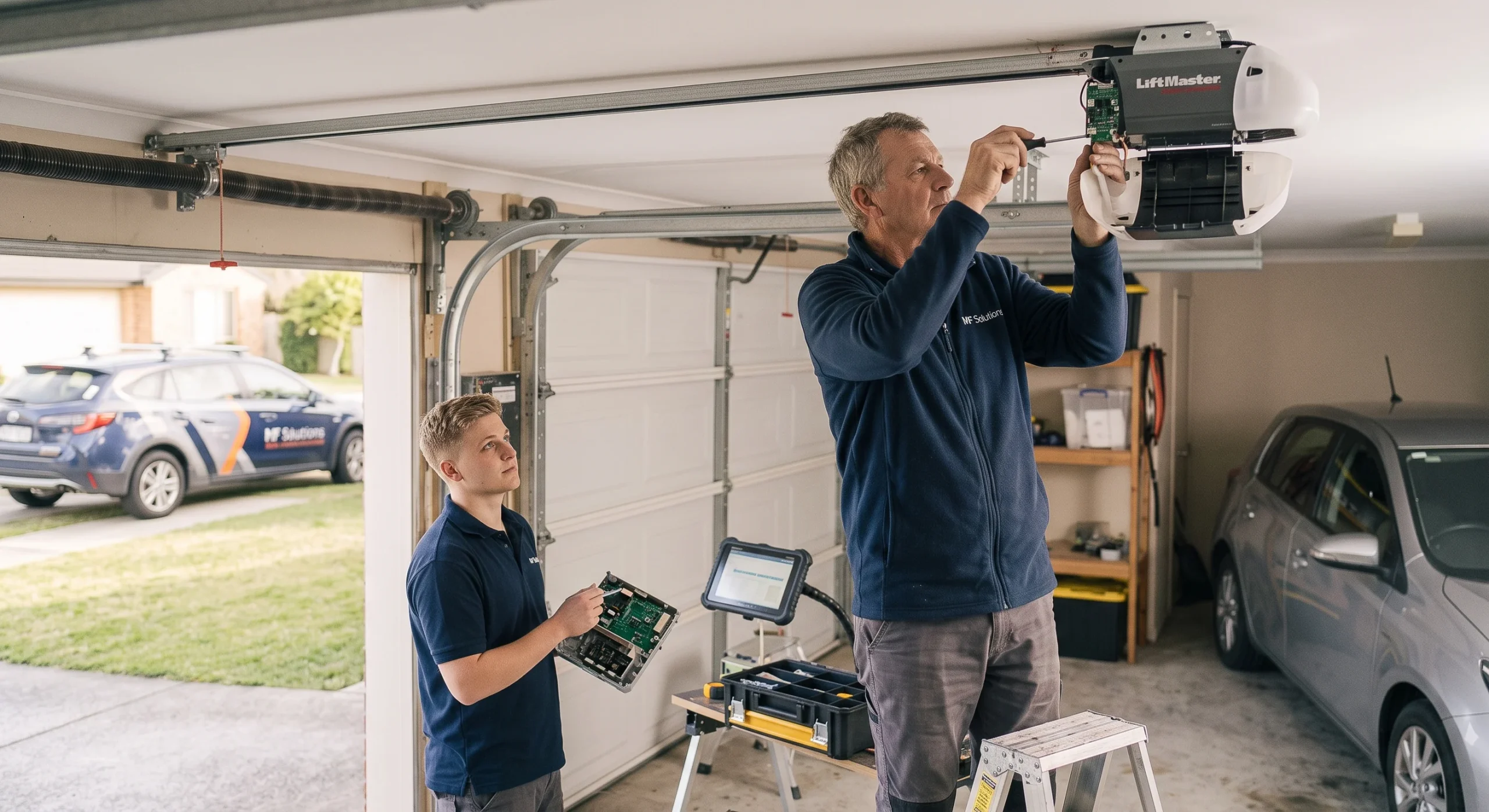
A trained technician brings a level of precision and diagnostic capability to garage door opener parts that routine homeowner maintenance cannot replicate.
What a professional can do to avoid garage door opener parts replacement:
- Spring tension calibration requires specialized tools most homeowners lack.
- Logic board and garage door motor diagnostics catch faults before failure.
- Trolley, carriage, and sprockets show wear only a trained eye can assess.
- Aging parts need compatibility checks against available replacement parts.
- Expert advice determines whether parts need maintenance or replacement.
Scheduling a professional visit at least once a year gives every garage door opener part the thorough assessment it needs to stay functional.
Maintain Garage Door Opener Parts the Right Way to Avoid Costly Replacement
Garage door opener parts that receive consistent maintenance last longer and perform better than those that are only addressed after something goes wrong. Building a routine around the right inspections, lubrication schedule, and professional checkups is what keeps the entire system running well beyond its expected lifespan.
MF Solutions is a trusted garage door service provider in Buffalo Grove, IL, and we bring the hands-on experience needed to keep every part of your system in top working condition. Contact us or give us a call today and let our team assess what your system needs to keep every garage door opener part functioning at its best.