

Diagnosis comes first in any garage door repair because it identifies the actual broken part instead of relying on assumptions based on symptoms. Technicians who bypass this step risk replacing working components while the real cause stays unresolved, often leaving the homeowner with a bigger bill and the same problem still unfixed.
Understanding this step gives homeowners leverage during every repair conversation, from the first phone call through the final invoice. This guide breaks down what proper diagnosis involves, why it matters before repair work begins, and how bypassing it can lead to costly mistakes and outright scams.
Key Takeaways
- Proper diagnosis identifies the true cause of garage door problems instead of assuming based on symptoms alone.
- Diagnosis protects technicians and homeowners from the safety risks tied to torsion springs.
- Bypassing diagnosis leads to unnecessary parts, inflated bills, and repeat service calls.
- Rushed inspections and vague explanations often signal a bypassed diagnosis.
- Written estimates and clear explanations should always come before approving any repair.
What Counts as a Proper Garage Door Diagnosis?

Proper diagnosis involves a full site inspection carried out in a specific, repeatable order, not a quick glance at whatever seems obviously damaged.
Technicians confirm several things before naming a single cause:
- Testing the door’s weight and balance across the full track.
- Checking torsion springs for wear, rust, or visible cracking.
- Inspecting hinges and rollers for looseness or misalignment.
- Confirming sensor alignment and checking for signal interference.
- Reviewing the opener’s motor response under normal load.
Comparing what a technician claims against a documented set of common red flags helps homeowners catch inconsistencies before signing anything.
What Happens During a Garage Door Diagnosis?
Technicians arriving for a garage door service typically start with a visual inspection before touching any tools.
Five actions typically define this part of the visit:
- Observing the door’s full range of motion for unusual noises or resistance.
- Testing sensors individually to rule out signal interference.
- Checking the door’s balance manually with the opener disconnected.
- Inspecting cables, drums, and garage door springs for visible wear.
- Documenting every finding before recommending a specific repair.
Watching this process unfold gives homeowners a much clearer picture of why one part gets named as the cause instead of another.
Why Is Diagnosis Required Before Any Garage Door Repair?
Diagnosis matters because it turns a repair into a confirmed fix backed by evidence, not a costly bet on the wrong part.
Reason | What It Prevents | Why It Matters |
Finds the Real Problem | Replacing parts that were never broken | Confirms the exact cause before any money gets spent |
Protects Your Safety | Injury from mishandled torsion springs | High-tension components require tested, careful handling |
Saves You Money | Paying for unnecessary repairs or parts | An accurate diagnosis leads to an accurate estimate |
Prevents Further Damage | Motor burnout or bent tracks from prolonged use | Early diagnosis keeps small issues from spreading |
Validates Warranties | Voided manufacturer coverage | Many warranties require documented, professional troubleshooting |
Comparing a technician’s findings against a second quote confirms whether the original diagnosis actually holds up before any repair moves forward.
Finds the Real Problem
Noisy doors or stuck tracks often point to a deeper issue hiding behind the obvious symptom, one that a quick visual check alone tends to miss entirely.
Diagnosis narrows down the real cause through a short list of checks:
- Testing whether the noise traces back to a broken spring or worn hinge.
- Ruling out a failing sensor before blaming the opener itself.
- Checking for a worn-out gear inside the motor housing.
- Confirming whether loose hardware is contributing to the symptom.
- Separating a cosmetic issue from a functional one before quoting a fix.
Naming the part behind a symptom protects homeowners from paying for a repair that doesn’t address the underlying garage door problem.
Protects Your Safety
Garage doors carry serious weight, and their torsion springs hold enough tension to cause severe injury if you handle them without proper testing.
Safety-first diagnosis includes these checks before any repair begins:
- Confirming garage door spring tension before any component gets touched.
- Identifying which parts carry stored energy under load.
- Checking cable condition for fraying or visible damage.
- Verifying the emergency release cord functions correctly.
- Flagging safety risks that require a professional inspection first.
Technicians confirming these details protect themselves and the homeowner from a repair that turns dangerous halfway through.
Saves You Money
Unconfirmed repairs often lead to buying the wrong parts or paying for work that never needed to happen in the first place.
Clear diagnosis narrows the estimate down to what the door actually needs:
- Pricing only the parts confirmed as damaged during inspection.
- Avoid replacing an entire spring assembly when only one spring failed.
- Comparing the estimate against typical repair services in the area.
- Requesting a written breakdown before approving any total.
- Asking why each listed part appears on the final invoice.
An accurate diagnosis removes confusion from the bill and keeps costly repairs from stacking up long after the original visit ends.
Prevents Further Damage
An unresolved garage door problem can ruin the motor or bend the tracks over time, especially when the door sees daily use without any correction.
Left unaddressed, small issues tend to escalate in a predictable order:
- Loose hinges eventually cause a door to sag on one side.
- Ignored sensor issues cause the opener to reverse unpredictably.
- Worn rollers eventually damage the track they travel along.
- Minor cable fraying can snap under the door’s full weight.
- Delayed repairs increase both cost and safety risk.
Diagnosing the issue early keeps a small, affordable fix from becoming a full garage door installation the household didn’t plan for.
Validates Warranties
Manufacturer warranties often require documented, professional troubleshooting before replacing any part, even when the fix itself seems minor.
Warranty coverage typically depends on a few specific conditions:
- Dated records of the professional inspection performed.
- Confirmation that a licensed technician handled the repair.
- Documentation naming the exact part that failed.
- Proof that the repair followed manufacturer guidelines.
- Records kept on file in case a related issue arises later.
Proper diagnosis creates the paperwork a warranty claim depends on, giving homeowners real peace of mind if a related issue resurfaces.
Why Does Bypassing Diagnosis Open the Door to Garage Door Repair Scams?
Scammers depend on homeowners never questioning a diagnosis, since a confident explanation rarely gets challenged in the moment.
These tactics repeat across nearly every reported case:
- Naming multiple failed parts without showing any physical evidence.
- Pressuring approval before providing a written estimate.
- Framing a routine issue as one of several garage door emergencies, such as a door that supposedly cannot close safely overnight.
- Quoting a price that shifts dramatically once work begins.
- Refusing to explain why a specific part failed.
To understand exactly how this pattern plays out from the first phone call to the final bill, read our guide on What Happens When Garage Door Repair Skips Diagnosis?, which walks through the financial and safety consequences step by step.
Warning Signs of a Rushed or Incomplete Garage Door Diagnosis
Rushed inspections often leave behind clues that a technician never actually confirmed the cause of the problem.
Watch for these signs during or after a repair visit:
- Diagnosis delivered within seconds of arrival, before any real testing.
- No explanation for why a specific part supposedly failed.
- Reluctance to show the damaged component before replacing it.
- A quote that changes substantially once the technician is on-site.
- Pressure to approve repairs immediately without a written estimate.
To confirm exactly what a legitimate technician should verify before naming a diagnosis, read our guide on How to Confirm a Diagnosis Happened in Garage Door Repair, which covers the exact questions worth asking on-site.
What to Do Before Approving Any Garage Door Repair?

The response chosen in the first few minutes after hearing a diagnosis often determines the outcome of the entire repair.
Handle these steps before approving any repair or signing anything:
- Ask for a written, itemized estimate before work begins.
- Request to see the specific part named as the cause of failure.
- Compare quoted pricing against typical costs for similar garage door maintenance work.
- Confirm the technician’s identification and years of experience with the company.
- Get a second opinion for any repair estimate that feels rushed.
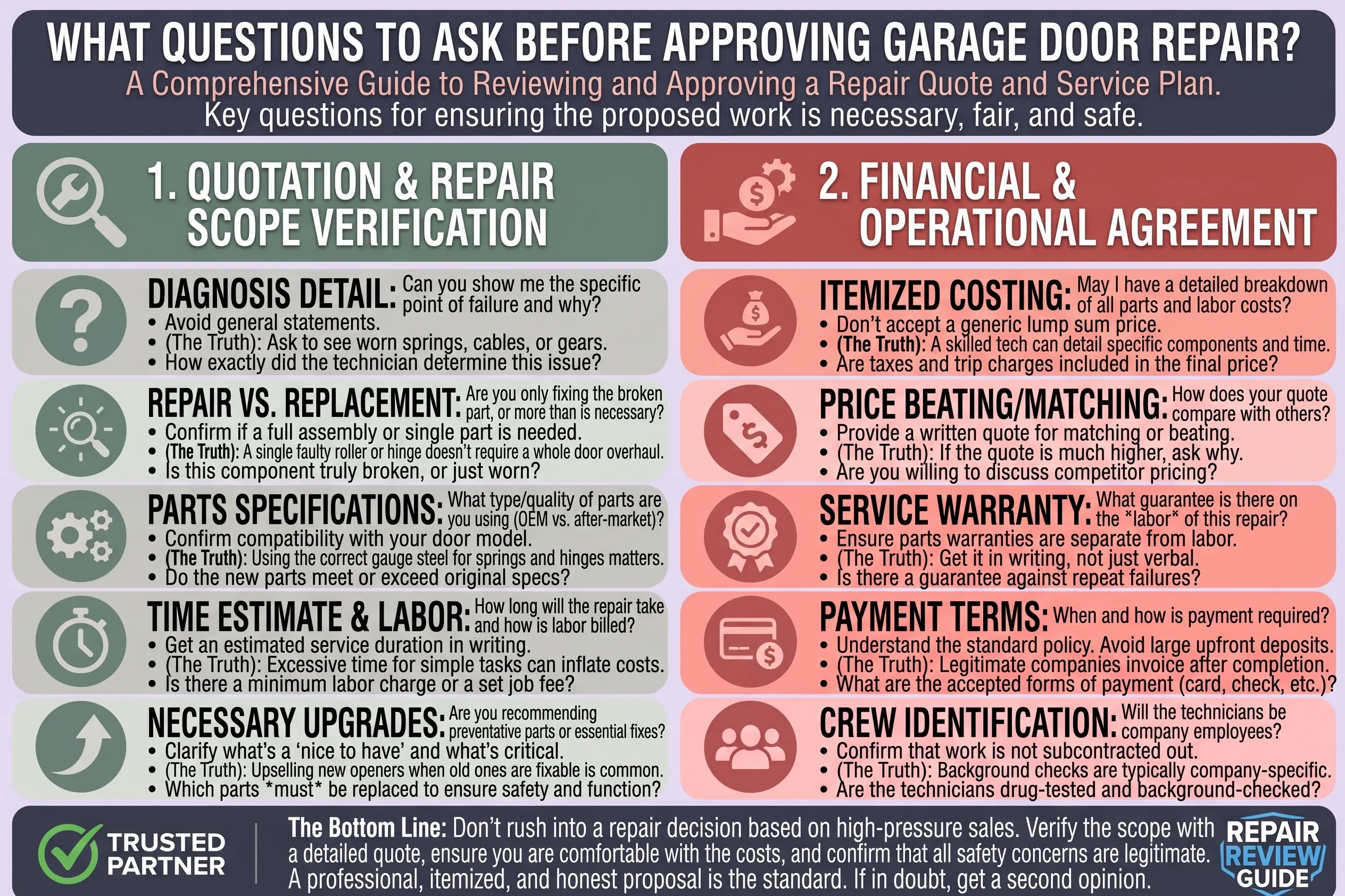
To break down the exact questions worth confirming before signing off on any estimate, read our guide on Questions to Ask Before Approving Garage Door Repair, which outlines what a homeowner should confirm first.
Diagnosis Decides Whether a Garage Door Repair Can Be Trusted
Trustworthy repairs start with the same point: a technician who tests the system thoroughly before naming a cause, rather than guessing from a quick look at the door. Confirming that step turns an uncertain repair into one backed by real evidence, protecting both the homeowner’s safety and their budget over the long run.
MF Solutions serves Buffalo Grove, IL, homeowners with technicians who diagnose every garage door repair and replacement before recommending a fix, no matter how minor the issue seems at first. Contact us or give us a call today, and let our trained team confirm the real cause before any work begins.