
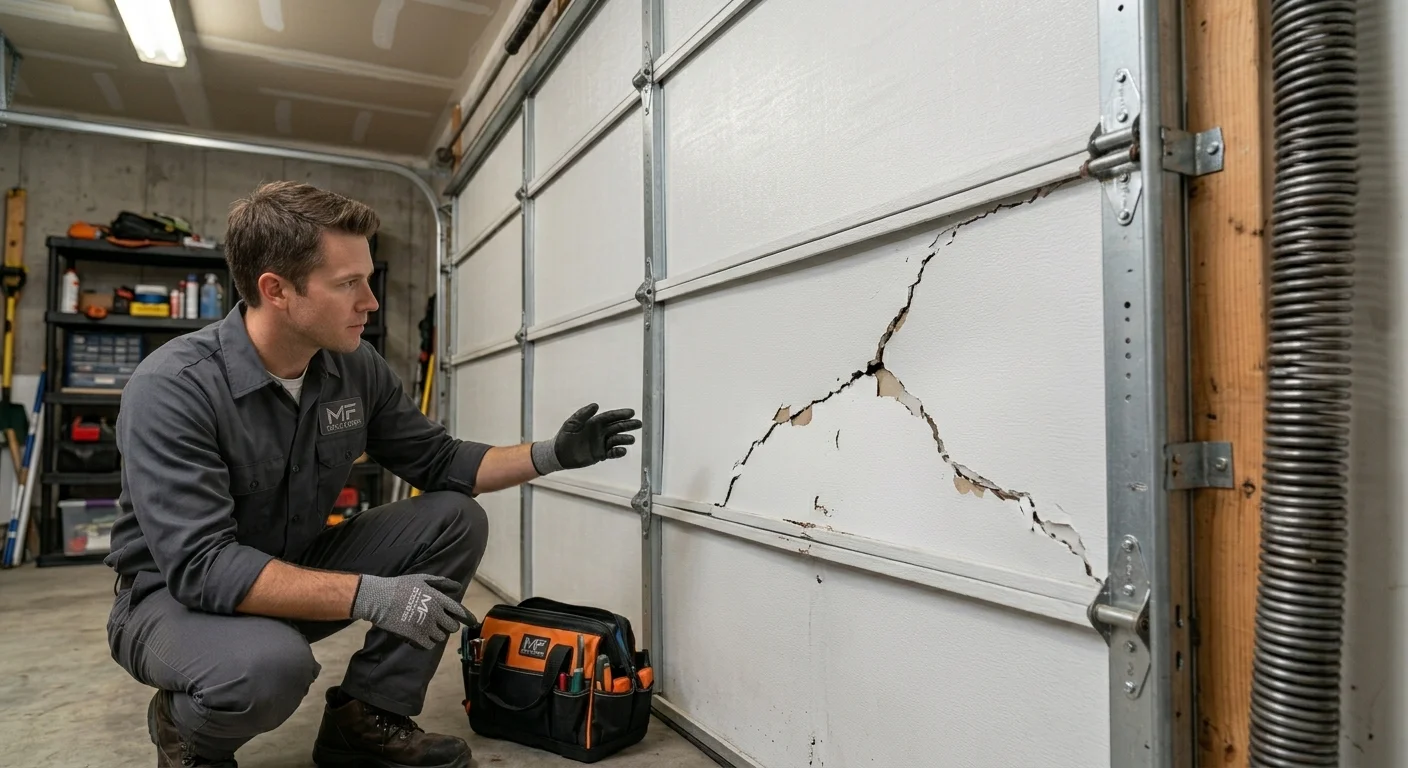
Garage door panels can bend and crack for many reasons, and most homeowners do not notice the problem until it worsens. Understanding what causes the damage is the key to catching it early and avoiding costly repairs.
Extreme weather, accidental impacts, and years of wear all work together to break panels down faster than expected. This article covers every major cause and what you can do to keep your door protected before small issues turn into big ones.
Why Should Buffalo Grove Homeowners Take Garage Door Panel Damage Seriously?
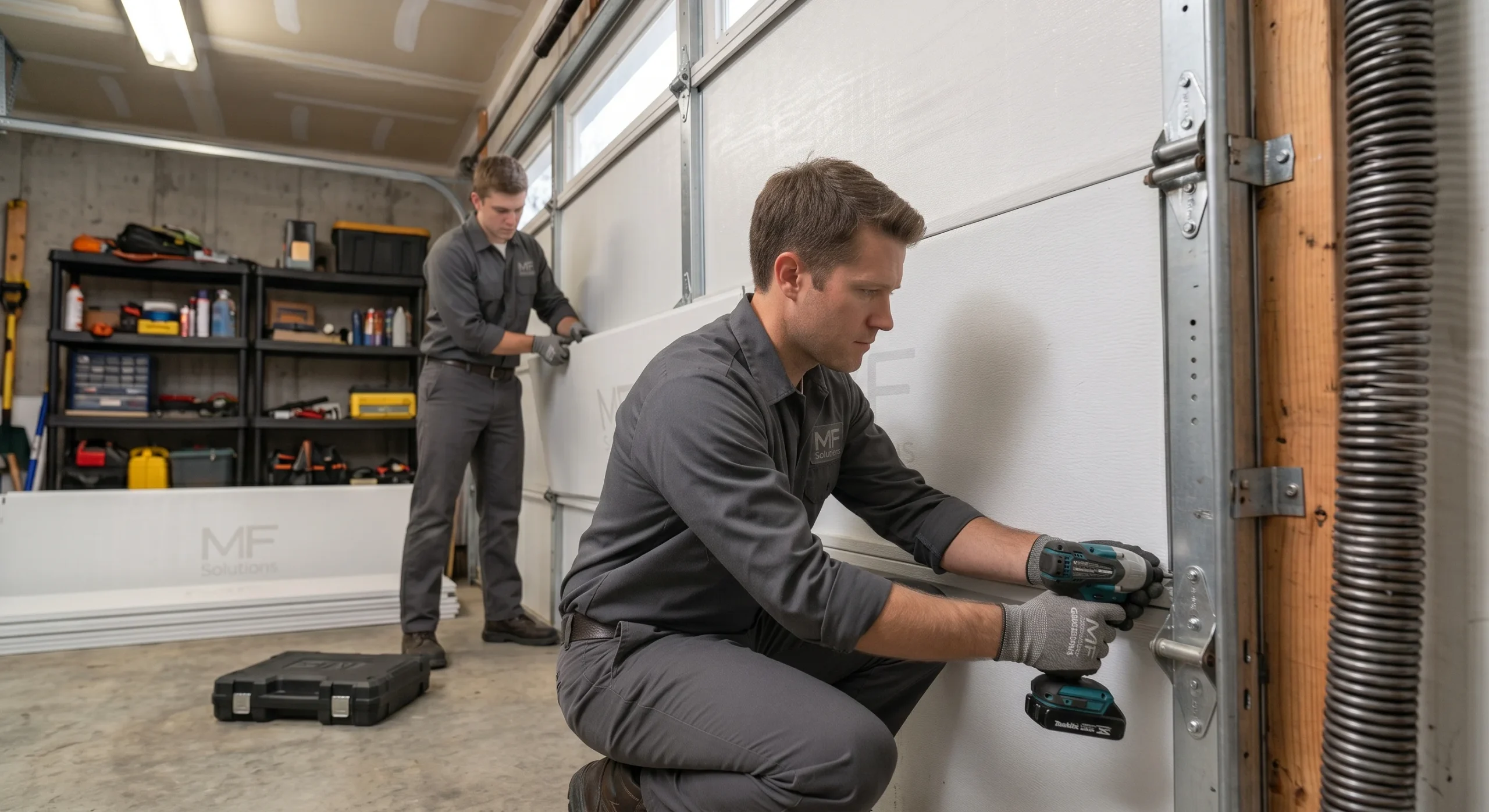
A damaged garage door panel rarely stops at just one problem because the stress travels beyond the surface, puts pressure on surrounding components, and creates a chain reaction that affects how the entire door operates.
Here is what is at stake when garage door panel damage is left alone:
- A single bent panel throws off the door’s alignment and causes uneven movement along the tracks
- Cracks and gaps along the panel edges allow moisture and cold air to enter the garage
- Weakened panels compromise the door’s structure and make it easier to force open
- Hinges and openers strain harder than normal to compensate for the added resistance
- Small dents that go unaddressed gradually spread into damage across the entire door system
To understand your options once damage has occurred, read our guide on Can a Bent Garage Door Panel Be Fixed or Replaced?, which covers how to assess the damage and choose between repair and replacement.
Warning Signs Your Garage Door Panels Are Failing
Catching the early signs of a failing garage door panel can save you from dealing with a much costlier repair or full replacement down the road.
Watch for these warning signs:
- Visible dents, cracks, or warping on the panel surface
- Unusual grinding, rattling, or popping sounds during operation
- The door struggles, stalls, or reverses unexpectedly during opening or closing
- Gaps forming along the panel edges that let in outside air and moisture
- Panels that visibly misalign when the door is fully closed
Addressing these warning signs early prevents further damage and keeps your door from needing a full garage door repair.
Common Causes of Bent and Cracked Garage Door Panels
Physical Impact and Accidental Collisions
Even a minor collision can bend a garage door panel out of position, compromising the door’s structural integrity.
Common sources of impact damage include:
- Backing a vehicle into the door leaves deep dents on the panel surface
- Falling bikes or tools stored nearby strike the lower panels during everyday use
- Flying debris from strong winds drives directly into the panel face
- Lawn equipment bumping into the door creates repeated low-impact damage
- Balls and toys thrown near the garage send direct hits into the panels
Repeated impact damage often indicates the need for professional garage door service before the problem worsens.
Extreme Weather Conditions in Buffalo Grove, IL
Buffalo Grove’s climate puts constant physical stress on garage door panel materials that breaks them down from the outside in.
Watch for these weather-related effects:
- Freezing temperatures cause panels to contract and develop surface cracks
- Heavy snow pressing against the door bends the lower panels inward
- High humidity forces moisture into panel materials and causes warping
- Rapid temperature swings break down the panel’s protective coating
- Road salt settling on the surface triggers rust formation on metal panels
Panels exposed to harsh seasonal shifts deteriorate faster and require more frequent inspection and maintenance.
Age and General Wear and Tear on a Garage Door Panel
Every garage door panel has a finite lifespan, and years of daily operation gradually wear down the materials and coatings that keep it performing well.
Signs of age-related deterioration include:
- Protective coatings fade and peel, leaving raw panel material exposed to the elements
- Metal panels develop rust along edges where moisture collects over time
- Hinges and bolts loosen from repeated movement and create stress points on the panels
- Weatherstripping breaks down and allows moisture to reach the panels directly
- Micro-cracks form across the panel face from years of expansion and contraction
Panels exhibiting multiple signs of age-related wear are strong candidates for replacement rather than repeated short-term repairs.
Poor Installation and Low-Quality Materials
Panels built from low-grade materials or installed incorrectly show signs of damage far sooner than properly built and fitted doors.
Look out for these installation and material-related problems:
- Misaligned panels put uneven pressure on the door’s frame and tracks
- Low-grade steel or thin aluminum panels dent under impacts that better materials would absorb
- Incorrect hardware leaves panels without proper support during operation
- Panels not anchored firmly to the frame shift out of position and crack
- Skipping manufacturer guidelines during setup creates structural weak points
Quality materials and professional installation significantly lower the long-term garage door panel replacement cost.
Lack of Regular Maintenance
Simple periodic care is all it takes to prevent most of the damage that leads to a failing garage door panel.
Neglect commonly shows up as:
- Dry tracks and hinges create friction that stresses panels with every cycle
- Road salt and dirt buildup on the surface slowly degrades the panel material
- Minor dents and hairline cracks left unaddressed grow into significant damage
- An unbalanced door places uneven pressure that causes panels to bend faster
- Skipping annual inspections allows small issues to become costly failures
Most of these problems are avoidable with monthly visual inspections of hinges, rollers, and panels before minor wear turns into a much bigger repair.
How to Slow Down Garage Door Panel Damage
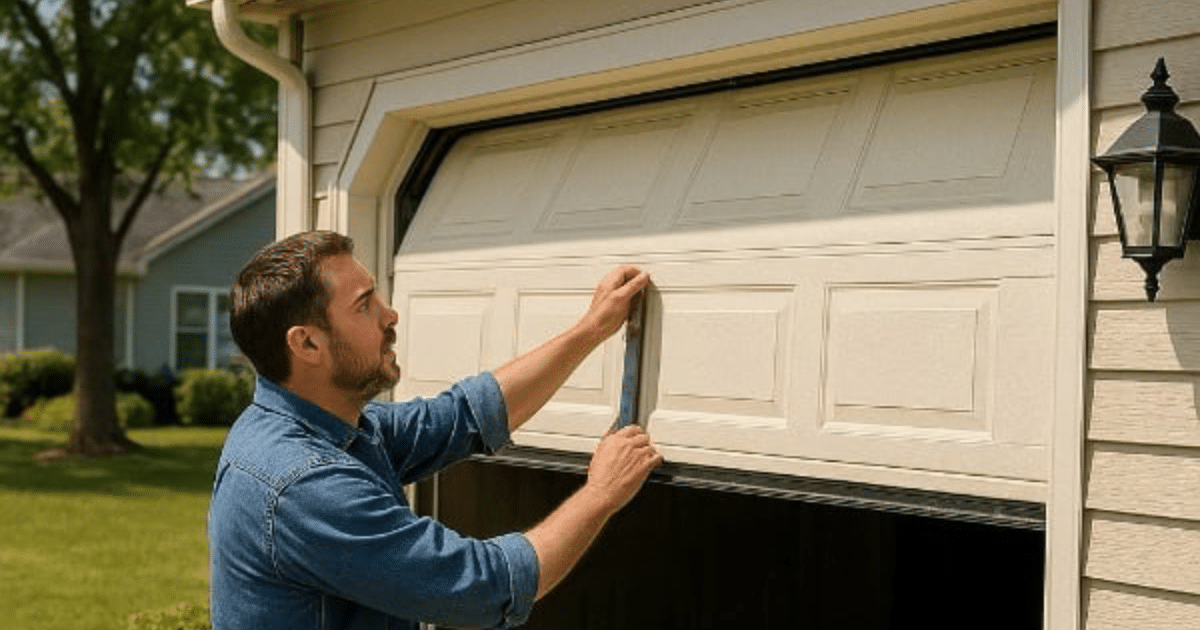
Routine care and periodic attention are the most practical ways to extend the life of your garage door panels and avoid costly repairs down the road.
Here are the most effective ways to slow down panel damage:
- Schedule a professional inspection annually to catch early signs of wear
- Lubricate hinges, tracks, and rollers twice a year to reduce panel stress
- Clear snow and ice from the base of the door during Buffalo Grove winters
- Replace worn weatherstripping to keep moisture away from the panels
- Address small dents and cracks before they develop into significant damage
Keeping up with these simple habits is the most practical approach to garage door maintenance, helping extend panel life and prevent costly repairs.
The Cost of Ignoring a Damaged Garage Door Panel
A damaged garage door panel that goes unaddressed creates a chain of problems that affects your door system, security, and energy efficiency all at once.
Here are the real costs of ignoring panel damage:
- Bent panels force hinges, tracks, and openers to work harder than designed
- Cracked panel gaps let outside air in and drive up heating costs
- Weakened panels compromise home security and make the door easier to force open
- Surrounding panels and hardware wear down faster from the added stress
- Minor damage left alone escalates into a full garage door replacement
To see how long panels typically last before damage like this becomes unavoidable, read our guide on What Is the Average Lifespan of a Garage Door Panel?, which covers the key factors that affect panel lifespan.
When to Repair vs. When to Consider Garage Door Panel Replacement
Not every damaged garage door panel requires a full replacement, but waiting too long to call can turn a manageable repair into a much bigger expense.
Factor | Repair | Replace |
Extent of damage | Minor dents or surface cracks on a single panel | Multiple panels are bent, cracked, or structurally compromised |
Door age | The door is relatively new, and panels are still available | The door is old, outdated, or discontinued, with no matching panels |
Door functionality | The door opens and closes normally despite the damage | Damage affects the alignment, operation, or safe function of the entire door |
Cost consideration | The repair cost is significantly lower than the full replacement cost | Repeated repairs are adding up, and replacement is more cost-effective |
Appearance | Damage is cosmetic and does not affect curb appeal | Visible damage affects the overall look and value of the home |
Panel availability | A matching replacement panel can be sourced easily | Panels are discontinued or impossible to match with the existing door |
To figure out which situation applies to your door, check out our guide on When Should You Replace a Garage Door Panel?, which walks homeowners through every scenario worth knowing before making a final decision.
Know What’s Damaging Your Garage Door Panels Before It Gets Worse
Understanding the causes of bent and cracked garage door panels is the first step toward protecting your home from a much more costly repair down the road. Recognizing the warning signs early and acting on them quickly is always the most practical way to extend the life of your panels.
MF Solutions is here to help Buffalo Grove homeowners get to the root of their garage door panel issues with professional, lasting repairs. Contact us or give us a call today to speak with a skilled technician who can assess the damage and help you find the most practical solution for your home.