

Garage door opener parts wear down over time because every cycle puts mechanical and electrical stress on the components that keep the system running. When that stress builds up without attention, parts begin to fail in ways that affect the performance, function, and overall condition of the entire system.
Part failure does not happen without reason, and the causes behind it are more specific and predictable than most people realize. Knowing what drives garage door opener parts to the point of replacement is what separates a homeowner who catches problems early from one who faces a full system breakdown.
What Happens When Garage Door Opener Parts Fail?
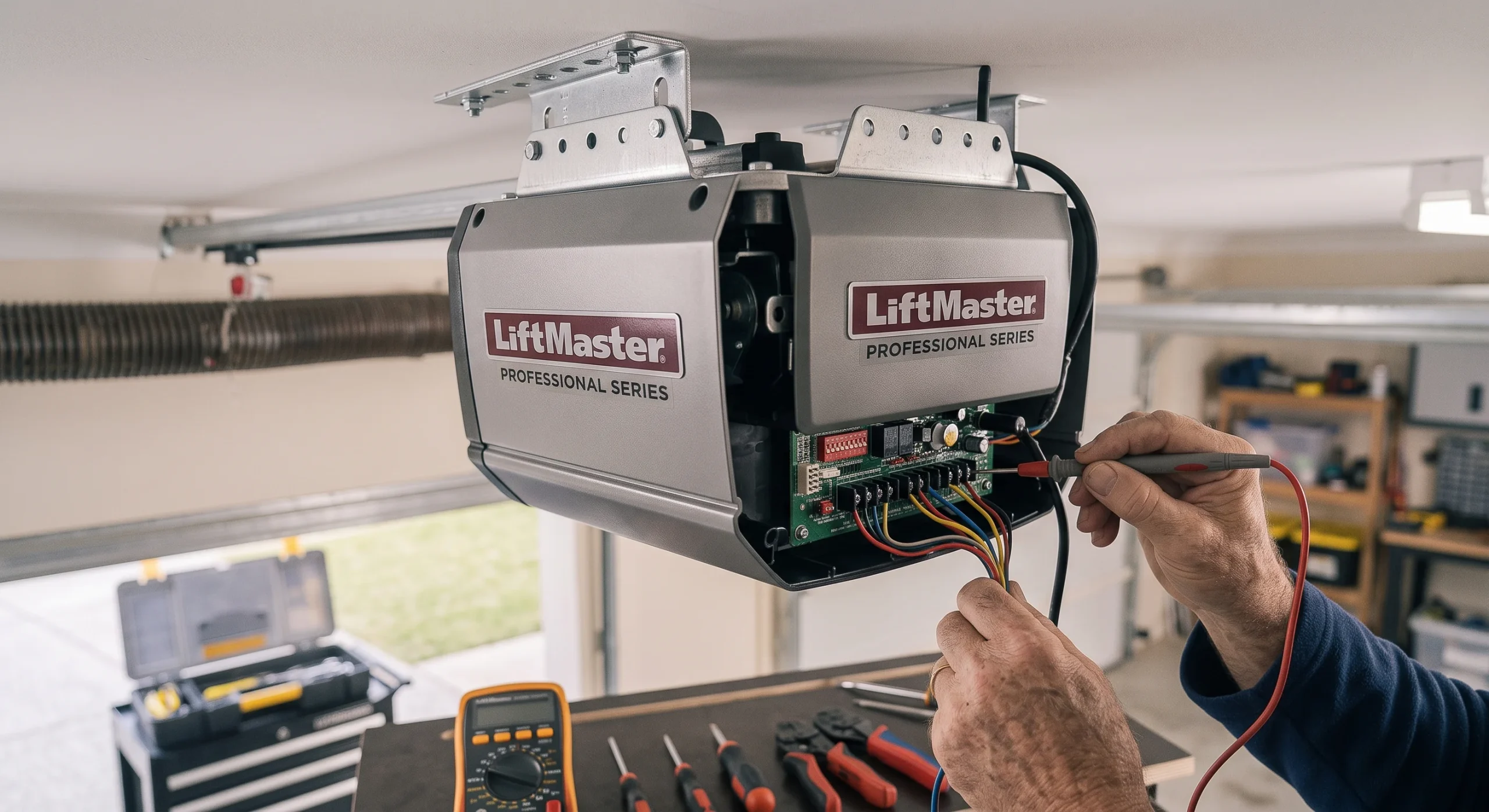
When one garage door opener part breaks down, the surrounding components absorb the extra strain, the stress spreads through the entire system, and the whole opener begins to deteriorate from that single point of failure.
Here is what that breakdown commonly looks like:
- The opener hums or buzzes, but the door does not move
- The remote control sends a signal, but nothing happens
- Photo eyes and safety sensors stop detecting objects in the door’s path
- Limit switches lose their calibration and cause the door to over-travel
- The circuit board stops processing safety inputs from sensors entirely
To understand the specific parts behind these failures, read our guide on What Are the Most Common Garage Door Opener Parts to Replace?, which covers the components Buffalo Grove, IL, homeowners deal with most.
What Actually Causes Garage Door Opener Parts to Fail
Stripped Gears and Sprockets
Opener motors rely on plastic or nylon drive gears that were never designed to carry the full weight of an unbalanced door.
- Why It Happens: When a garage door spring wears out and the door loses balance, the opener is forced to lift the full door weight instead of the intended 5 to 10 pounds, which rapidly strips the gear teeth.
- Signs It Needs Replacement: The motor runs, but the chain or belt stays completely still, or a grinding and clicking sound comes from inside the opener housing during every cycle.
Stripped gears almost always trace back to a spring that can no longer support the door, and that imbalance is what puts the entire drive system under excess load.
Worn Belts, Chains, or Cables
Constant tension and heavy lifting cause drive belts to fray and metal chains or lift garage door cables to stretch and rust over time.
- Why It Happens: Repeated heavy lifting, combined with exposure to moisture and temperature changes, causes belts to crack, chains to stretch and sag, and cables to corrode, until the drive system can no longer move the door properly.
- Signs It Needs Replacement: The system sags, jerks during operation, or produces a loud grinding noise, and in some cases, the chain slips off the sprocket and jams the trolley mid-cycle.
Tension and lubrication checks on belts, chains, and cables are what keep the drive system working through its full expected lifespan.
Faulty Safety Sensors (Photo Eyes)
Safety sensors sit close to the ground, where dirt, physical impacts, and wiring degradation regularly affect their performance.
- Why It Happens: Exposure to dirt, humidity, and accidental bumps knocks photo eyes out of alignment, and wiring connected to the sensors corrodes over time until the beam can no longer confirm the path is clear.
- Signs It Needs Replacement: The garage door opens fine, but refuses to close unless the wall button is held down, or one sensor light blinks while the other stays dark during a closing attempt.
Photo eye misalignment is one of the most misdiagnosed problems in garage door repair, and the reversal behavior it causes is rarely about the door itself.
Malfunctioning Circuit Boards
Electronic components inside the opener are sensitive to power fluctuations, moisture, and heat that accumulate over years of continuous operation.
- Why It Happens: Power surges, moisture intrusion, and age degrade the logic board until it can no longer process signals from the remote control, keypad, or safety sensors connected to the system.
- Signs It Needs Replacement: Remotes and keypads go completely unrecognized even after battery replacement, lights stay on after every cycle, or the door begins activating on its own without any input.
Circuit board failure is often mistaken for a remote or sensor issue, and an accurate diagnosis points the repair in the right direction from the start.
The Limited Lifespan of Garage Door Opener Parts
Garage door opener parts are built to last, but daily use, environmental exposure, and mechanical stress determine how quickly each one wears out.
Part | Average Lifespan | Main Cause of Wear |
Drive Belts, Chains, and Sprockets | 10 to 15 years | Constant tension, friction, and moisture exposure |
Gears and Gear Kits | 5 to 10 years | Door imbalance and excess load on the motor |
Safety Sensors (Photoelectric Eyes) | 5 to 7 years | Dirt, misalignment, and wiring corrosion |
Remote Controls, Keypads, and Batteries | 3 to 5 years | Battery corrosion and daily physical wear |
Wall Consoles and Control Panels | 10 to 15 years | Electrical surges and button deterioration |
Logic Board and Motor Unit | 10 to 15 years | Heat, moisture, and power fluctuations |
Trolley and Carriage Assembly | 10 to 15 years | Friction, misalignment, and mechanical stress |
Knowing the lifespan of each part helps homeowners plan for replacement before a breakdown occurs.
The Risks of Ignoring Failing Garage Door Opener Parts
Failing garage door opener parts do not fix themselves, and every cycle the system runs in that condition puts more components at risk.
Here is what happens when failing parts go unaddressed:
- A broken garage door spring forces the opener motor to carry the full door weight
- Misaligned safety sensors allow the door to close on people or objects in its path
- Frayed cables create uneven tension that can cause the door to collapse mid-cycle
- A malfunctioning circuit board may trigger the door to open on its own
- Worn garage door hardware causes the entire system to derail during operation
To recognize the warning signs before a part gives out completely, read our guide on Signs That Garage Door Opener Parts Need Replacement, which covers the most common indicators homeowners notice before a breakdown.
How Improper Handling Speeds Up Part Deterioration
Garage door opener parts wear out faster when the system is operated or serviced incorrectly, and the damage often spreads before it gets noticed.
Here is how improper handling accelerates part deterioration:
- Running the opener with a broken spring forces the motor beyond its load capacity
- Non-OEM parts throw off the timing and balance of the entire drive system
- Skipping routine checks allows minor wear to go undetected
- Forcing the door when the trolley is damaged disconnects the drive system
- Low lubrication and loose hardware accelerate friction wear
Improper handling accelerates wear on every connected part, and the damage it causes compounds with each cycle the system runs.
When Professional Replacement Becomes the Only Option
Garage door opener problems reach a point where adjustments and minor fixes no longer work, and professional replacement becomes the only path forward.
Here is when professional replacement becomes necessary:
- The garage door motor has overheated and no longer runs consistently
- The circuit board has failed, and compatible replacement parts are no longer available
- Multiple parts have failed at the same time, making individual repairs impractical
- The opener is more than 15 years old and no longer meets current safety standards
- Repair costs outweigh the value of keeping the existing unit running
To get the most out of your system after professional replacement, read our guide on Maintaining Garage Door Opener Parts to Avoid Replacement, which covers habits that keep openers running well past their average lifespan.
Why Garage Door Opener Parts Wear Out and What You Should Do About It
Garage door opener parts follow predictable wear patterns, and understanding the reasons behind failure helps homeowners make informed decisions about their system. Every part that fails has a documented cause, and knowing those causes helps homeowners stay ahead of damage.
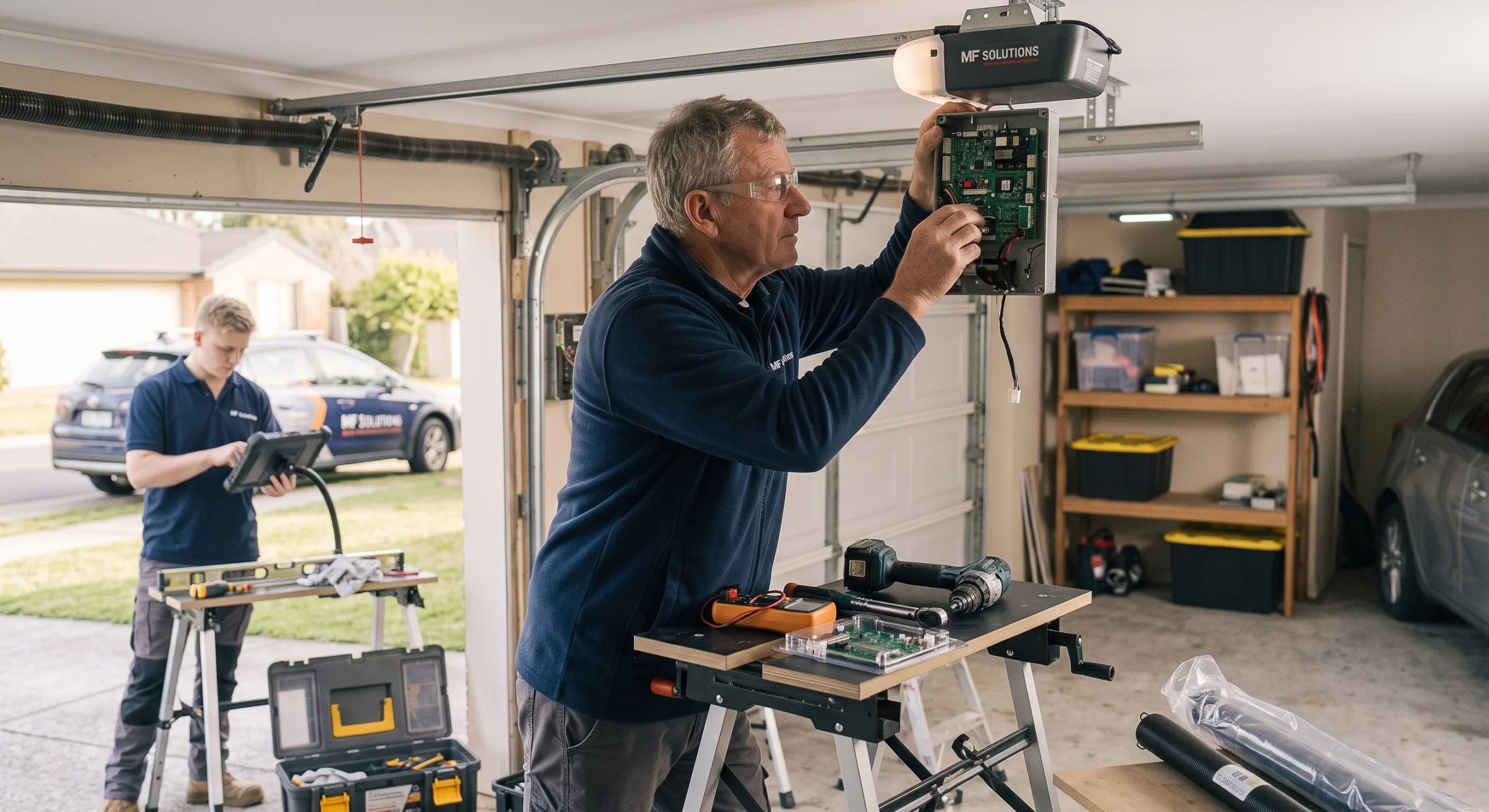
MF Solutions specializes in diagnosing, repairing, and replacing garage door opener parts for homeowners in Buffalo Grove, IL, through honest inspections and accurate service. Contact us or give us a call today, and let our team assess what your system needs to keep every part running at its best.