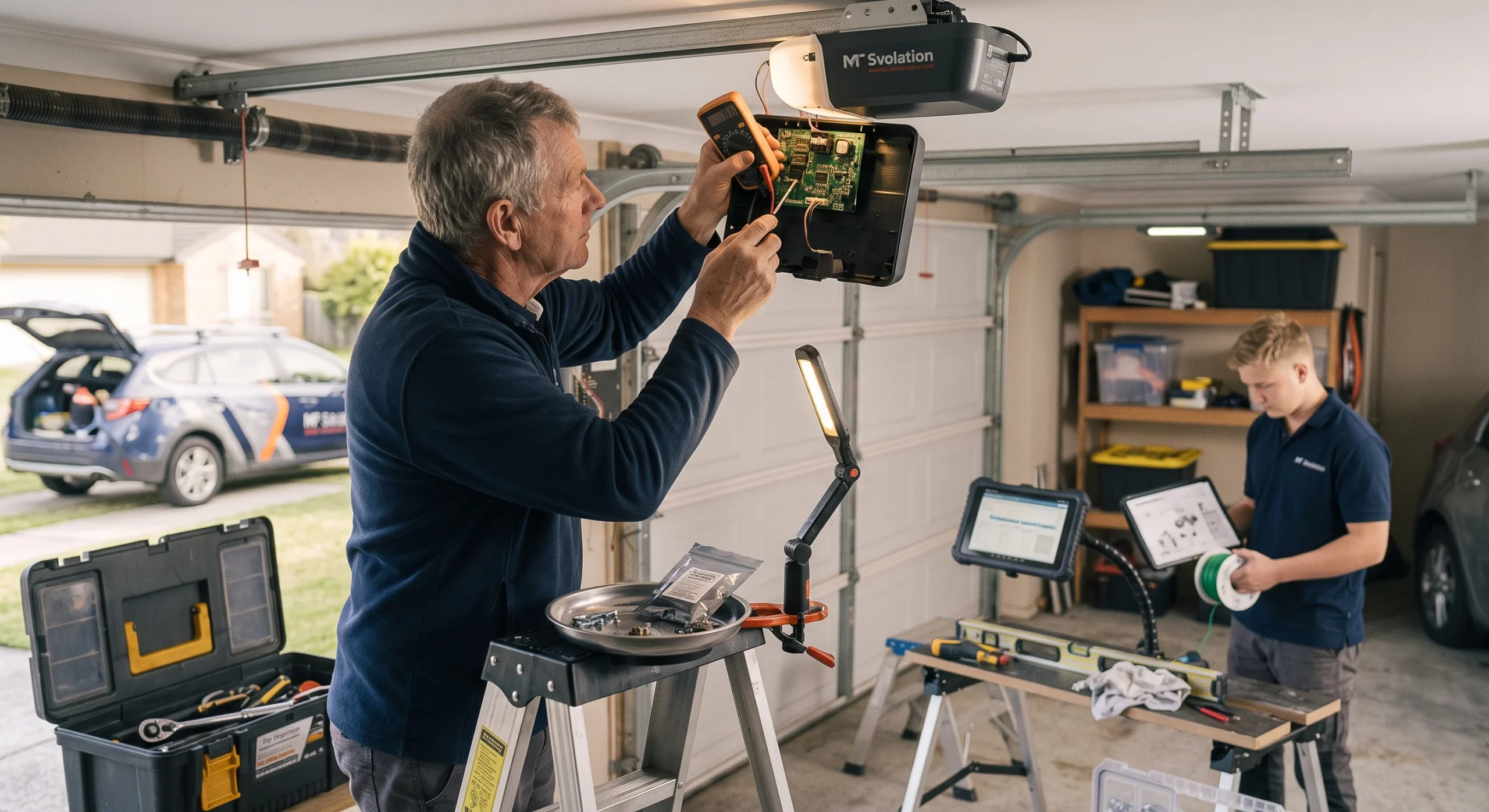
Garage door opener parts are built to handle thousands of cycles, but constant mechanical stress and daily wear will eventually cause even the most durable components to break down. Understanding which parts fail the most often is the first step toward avoiding a full system breakdown and keeping repair costs low.
Replacing a single worn-out part at the right time is far less expensive than replacing the entire opener. This guide covers the most common garage door opener parts that need replacing, the causes of each failure, and what every homeowner should know before making a repair decision.
Why Knowing Which Garage Door Opener Parts to Replace Actually Matters
Every part inside a garage door opener has a job, and when one starts to wear out, the surrounding components absorb the extra strain, and the entire system begins to work harder than it should.
Here is why knowing your garage door opener parts gives you a real advantage:
- Early detection prevents small issues from turning into expensive repairs.
- Clear communication with a technician leads to faster and more accurate service.
- Identifying the failing part prevents unnecessary replacements across the whole system.
- Knowing what to inspect saves time and avoids unnecessary service visits.
- Better maintenance habits come naturally when you understand what each part does.
To understand what drives these part failures from the start, read our guide on Why Garage Door Opener Parts Need Replacement, which covers the most common reasons Buffalo Grove, IL, homeowners find themselves dealing with a broken opener.
The Most Common Garage Door Opener Parts That Need Replacing
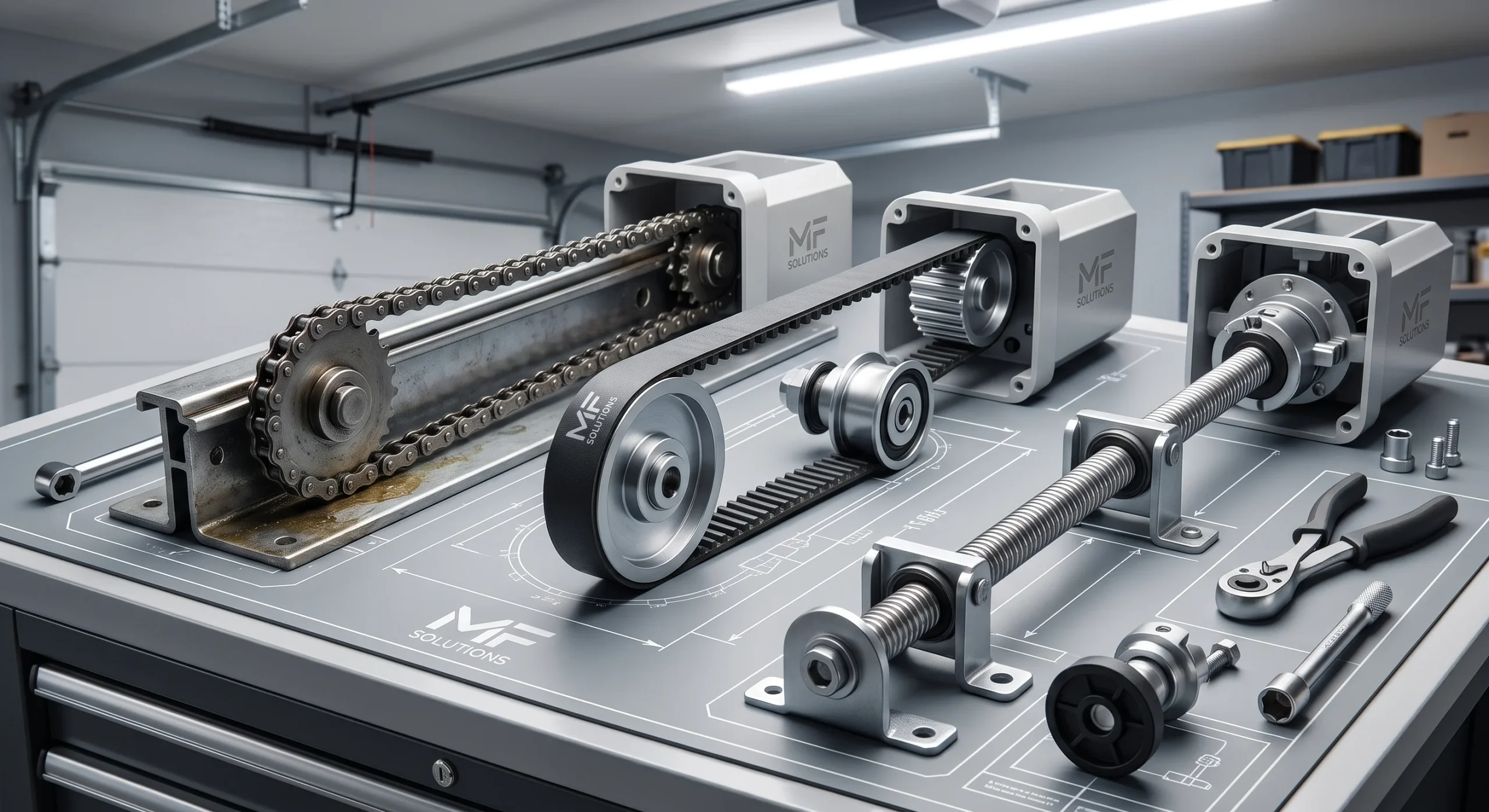
Drive Belts, Chains, and Sprockets
Constant tension and friction cause belts, chain drives, and sprockets to stretch, slip, or snap over thousands of cycles.
- Why It Fails: Lack of lubrication combined with constant mechanical tension causes these parts to stretch, corrode, or snap well before their expected lifespan.
- Signs and Symptoms: The motor runs through a full cycle, but the door never moves, or the system produces loud clattering and jerking sounds during operation.
Regular lubrication and tension checks are what keep the drive system working through its full expected lifespan.
Gears and Gear Kits
Internal gears are designed to strip before the garage door motor burns out, acting as the first line of protection against abnormal loads.
- Why It Fails: High-density plastic gears are built to absorb damage first, and they strip when a broken garage door spring or an overloaded door applies excessive force to the system.
- Signs and Symptoms: A loud grinding noise comes from the motor housing while the opener runs, or the trolley carriage moves the full length of the rail without engaging the door.
Gear failure almost always traces back to an underlying issue that must be identified before the kit is replaced.
Safety Sensors (Photoelectric Eyes)
Photo eyes sit just inches off the ground, making them among the most frequently bumped, misaligned, and exposed to dirt parts on the system.
- Why It Fails: Because of their low position near the floor, photo eyes are highly vulnerable to accidental kicks, car bumpers, and dirt buildup that blocks the beam or knocks them out of alignment.
- Signs and Symptoms: The opener lights flash repeatedly, and the door immediately reverses when closing is attempted, even when nothing is blocking the path.
Keeping photo eyes clean and properly aligned is what allows the safety sensor system to complete every closing cycle without interruption.
Remote Controls, Keypads, and Batteries
Daily drops, temperature swings, and repeated use degrade the circuitry and battery contacts inside every garage door opener remote and keypad.
- Why It Fails: Exposure to physical drops, extreme temperatures, and normal battery drain weakens internal components and reduces signal strength over time.
- Signs and Symptoms: Pressing the remote or keypad produces no response, or the unit only registers a signal when held directly in front of the opener.
Signal problems and worn contacts are often misread as opener malfunctions rather than isolated device failures.
Wall Consoles and Control Panels
Micro-switches and electrical contacts in wall consoles wear down gradually over years of daily button presses, until the unit stops responding altogether.
- Why It Fails: Internal micro-switches and contacts wear out or collect dust and moisture over the years of daily use, cutting off the signal between the console and the opener.
- Signs and Symptoms: The wall button produces no response from the opener, or the door begins opening and closing on its own without any command being sent.
Console symptoms often mirror those of a logic board issue, making proper diagnosis essential before ordering any parts.
Logic Board and Motor Unit
Limit switches, sensor communication, and remote signal processing all run through the circuit board, making it the most critical electronic component in the entire opener.
- Why It Fails: Power surges, lightning strikes, age, and moisture intrusion into the opener housing can fry the circuit board or burn out the garage door motor without any prior warning.
- Signs and Symptoms: The opener fails to respond to any input, including remotes, keypads, and the wall console, or operates randomly without any command from any source.
Logic board failures can look identical to those of several other parts, so ruling out simpler causes first is always the smarter approach.
Trolley and Carriage Assembly
The screw drive carriage and trolley handle direct mechanical force on every cycle, making wear unavoidable without proper garage door maintenance.
- Why It Fails: Debris buildup, lack of lubrication, and metal contraction during Buffalo Grove, IL winters cause the carriage to bind, crack, or seize over time.
- Signs and Symptoms: The door shudders or jerks along the garage door track during operation, or the opener motor runs continuously while the door stops mid-cycle.
Addressing debris buildup and metal fatigue early is what extends the working life of the entire carriage assembly.
When Should Garage Door Opener Parts Be Replaced?
Knowing when to act on a failing part is just as important as knowing which part is causing the problem.
Part | Replace When |
Drive Belts, Chains, and Sprockets | Motor runs, but the door never moves, or loud clattering occurs during operation |
Gears and Gear Kits | Grinding noise from the motor housing or the trolley moves without engaging the door |
Safety Sensors | Opener lights flash, and the door reverses immediately with nothing in the way |
Remote Controls and Keypads | No response after a battery change, or the signal only works up close |
Wall Consoles and Control Panels | Wall button produces no response, or the door activates without any command |
Logic Board and Motor Unit | Opener fails to respond to any input, or a random operation occurs on its own |
Trolley and Carriage Assembly | Door shudders along the track, or the motor runs while the door stops mid-cycle |
To spot the early warning signs before a part completely fails, read our guide on Signs That Garage Door Opener Parts Need Replacement, which covers the most common indicators Buffalo Grove, IL, homeowners notice before a breakdown happens.
How to Order the Right Garage Door Opener Replacement Parts
Getting the wrong part wastes time and can cause further damage to an opener that was already on the edge of failure.
Here is what to do before placing any order:
- Locate the model number on the motor unit housing before ordering
- Match the part number to your specific brand, whether it is LiftMaster, Chamberlain, or Genie
- Purchase OEM parts to ensure compatibility and avoid premature wear
- Buy from the manufacturer’s website, an authorized dealer, or a trusted local garage door service company
- Avoid discounted parts with no warranty, return policy, or verified brand origin
Getting the first order right keeps the garage door repair on schedule and the opener running without interruption.
How to Maintain Garage Door Opener Parts and Reduce the Need for Replacement
Proper maintenance extends the life of every garage door opener part and reduces the frequency of unexpected repairs.
Here is what every homeowner should check regularly:
- Lubricate all moving parts, including the garage door spring, track, and carriage, every six months
- Wipe down garage door opener sensors after winter storms to remove moisture and salt buildup
- Test the auto-reverse feature monthly by placing a small object under the door
- Inspect the garage door track for debris, bends, or buildup that could affect movement
- Schedule a professional garage door service inspection at least once a year
To keep every part of your opener lasting as long as possible, read our guide on Maintaining Garage Door Opener Parts to Avoid Replacement, which walks homeowners through a complete maintenance routine from top to bottom.

Addressing the Most Common Garage Door Opener Parts That Need Replacing Makes a Real Difference
Every garage door opener is built from individual parts, each with a specific role, and knowing which parts wear out most often leads to smarter, more informed repair decisions. Understanding what causes each part to fail and which warning signs to watch for helps an opener perform at its best for years to come.
MF Solutions is a professional garage door repair and service company dedicated to helping homeowners across Buffalo Grove, IL get every opener part diagnosed and replaced correctly. Contact us or give us a call today, and let our team assess what your system needs to keep every part running at full capacity.