
Homeowners rely on garage doors as the primary moving entry points on many properties, yet routine operation often masks early wear until a sudden malfunction occurs. Springs, cables, rollers, hinges, tracks, and opener systems work together to lift and guide a heavy door, so even minor changes in one component can increase strain across the system. Long-term safety depends on controlled movement, reliable braking, and secure closure, especially in homes with children, pets, and frequent vehicle traffic. Warning signs such as loud operation, uneven travel, or hesitation at the same point often indicate misalignment, part fatigue, or adjustment issues that can worsen if left unaddressed.
Understanding how these components interact helps homeowners recognize when the system is operating within a safe range and when professional evaluation is the safer choice. Garage door maintenance supports long-term safety by reducing uncontrolled movement, limiting part wear, and improving reliability across high-use components. Routine inspections focus on door balance, hardware stability, and consistent travel, which also enhance security by ensuring the door closes fully and remains sealed against weather and pests. Early maintenance enables proactive service planning rather than reacting to a breakdown that disrupts access or leaves the property unsecured.
Safety Risks That Grow When Maintenance Gets Skipped
Garage door systems are designed for controlled, guided movement, yet wear can gradually reduce control. Skipped care often results in loose hardware, worn rollers, and friction points, increasing strain on lift components. Over time, the door may drift out of alignment, reducing smooth travel and increasing the risk of a sudden stop or a crooked close. Safety concerns increase as lift support weakens, because springs and cables manage the force that keeps the door from dropping.
Common safety risks associated with neglected care include:
- Door travel that becomes jerky or uneven
- Increased risk of the door closing off-square and leaving a gap
- Roller wear that can lead to binding or track friction
- Hinge and bracket loosening that increases pinch-point hazards
- Opener force strain that can reduce safe reversal performance
- Lift support fatigue tied to garage door springs and load distribution
Safety-focused care also supports timely garage door repair decisions, since early correction can reduce the chance of damage spreading to other parts. When risk questions come up, homeowners often benefit from a professional review before using the door heavily again.
For a more detailed safety explanation, visit our blog, “What Happens When Garage Door Maintenance Is Skipped?”
How Regular Service Supports Reliability and Prevents Common Breakdowns
Maintenance supports reliability by keeping moving parts stable, reducing friction, and confirming that lift support is working as designed. Hardware checks confirm that rollers remain seated, tracks remain secure, and fasteners are properly secured. Balance checks help confirm the door is not overloading the opener, which can reduce repeated strain and shorten the life of key parts.
Reliability benefits often include:
- Fewer surprise stops caused by binding or misalignment
- More consistent closing that supports secure latching
- Reduced wear on rollers and hinges from friction
- Better response from garage door opener safety features
- Early identification of cable and spring fatigue
- Reduced the risk of an off-track garage door event during travel
When reliability improves, homeowners typically schedule garage door service at a convenient time instead of reacting to urgent access issues. In homes with frequent use, routine care can also reduce the chance of sudden garage door emergencies that affect security or vehicle access.
To learn how routine care reduces failure risk, check our article, “How Does Regular Garage Door Maintenance Prevent Failures?”
Warning Signs That Suggest Safety Checkups Should Happen Soon
Warning signs often appear before a complete breakdown, and early recognition supports safer planning. A door that starts rubbing, shaking, or reversing at the same point may indicate alignment problems, roller wear, or opener force issues. A door that closes unevenly or leaves gaps may also allow moisture intrusion, accelerating wear on the lower hardware.
Common warning signs include:
- New grinding, popping, or squealing sounds during travel
- The door reverses without a visible obstruction
- The door closes with a noticeable tilt or uneven seal
- Slow response or hesitation after pressing the control
- Frayed or slack appearance around the garage door cable path
- Visible damage on a garage door panel near hinge lines
- Increasing need for a garage door tune-up to restore smooth travel
Homeowners often ask about garage door maintenance near me when these warning signs start affecting daily routines. For many properties, scheduling a garage door safety check can help determine whether the door is safe to operate.
For guidance on professional timing, visit our blog, “When Does Garage Door Maintenance Need Professional Attention?”

What a Professional Maintenance Visit Focuses On for Safer Operation
Professional maintenance focuses on safety, stability, and consistent travel. The goal is to confirm that the door operates within safe limits and that wear points are identified early. Service visits also help homeowners understand whether targeted repairs will restore stability or whether broader planning is needed.
Lift support and balance evaluation
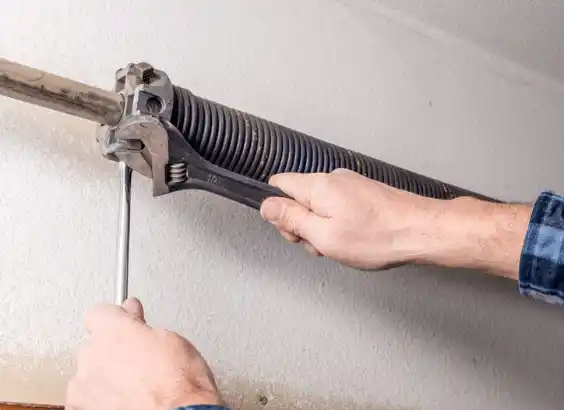
Technicians assess balance, spring support, and cable condition. When lift support is compromised, service planning may include torsion spring replacement based on door weight, wear, and safety risk.
Travel alignment and hardware stability
Tracks, rollers, hinges, and brackets are inspected for looseness, wear patterns, and alignment issues that can cause binding. Stable alignment helps reduce stress on parts that move every cycle.
Opener safety behavior and control response
Professionals evaluate reversal response, travel limits, and how the opener interacts with door resistance. Opener behavior can change when friction rises or balance shifts.
A clear evaluation helps homeowners plan next steps with fewer surprises and stronger safety outcomes.
Maintenance Planning That Supports Long-Term Door Safety
Long-term safety improves when maintenance is planned around use patterns, climate exposure, and door design. Some doors cycle many times a day, which increases wear on rollers, hinges, and lift support. Other doors are exposed to the weather, which accelerates corrosion near the bottom section. Planning also depends on door style, since heavier or insulated doors can place more load on lift components.
Service intervals and usage patterns
High-use households may benefit from scheduling checks more frequently, while lower-use households may allow more extended intervals. A professional can recommend a schedule based on door behavior and wear indicators.
Door type and upgrade decisions
Some homeowners choose custom garage doors for durability, insulation, or curb appeal, while others plan to replace an aging door when it no longer meets safety or reliability standards.
Keeping repair vs replacement decisions clear
When multiple sections or parts show wear simultaneously, homeowners may consider replacing the entire garage door to improve long-term stability and reduce repeat visits.
Planning supports safer operations and helps homeowners avoid reactive decisions during stressful breakdowns.
Practical Checklist Topics Pros Review During Routine Care
Routine maintenance checks follow consistent themes: safe travel, stable hardware, balanced lift, and secure closure. A structured approach helps homeowners understand what professionals evaluate and why those checks support safer operation.
A typical garage door maintenance checklist review includes:
- Track alignment and mounting stability
- Roller condition and smooth travel
- Hinge and bracket fastener security
- Seal condition and closure consistency
- Opener response, limits, and reversal behavior
- Lift support condition, including springs and cables
- Panel condition and section alignment
Many homeowners refer to ongoing care as routine garage door maintenance because predictable service reduces unexpected issues and supports safer daily use. Some service plans may also include garage door lubrication services based on door design and operating conditions, since friction changes can affect travel smoothness.
Keep Long-Term Safety Strong With Consistent, Professional Care
Garage door safety depends on controlled movement, stable alignment, and reliable lift support. Regular checks help reduce friction-driven wear, confirm opener safety behavior, and identify part fatigue before a sudden malfunction. Maintenance also supports home security by ensuring the door closes fully and remains sealed, reducing gaps and unpredictable operation. Professional evaluation is constructive when the door becomes noisy, closes unevenly, or shows visible wear around hardware points.
MF Solutions Inc helps homeowners strengthen long-term garage door safety through professional care centered on controlled movement, stable alignment, and dependable lift support. Our technicians review friction-related wear, verify the opener’s safety response, check for early part fatigue, and confirm the door closes fully and remains sealed to reduce gaps and irregular operation.
Contact us today or call now to schedule a safety-focused evaluation. Service is especially helpful when the door grows noisy, closes unevenly, or shows visible wear around key hardware points.