
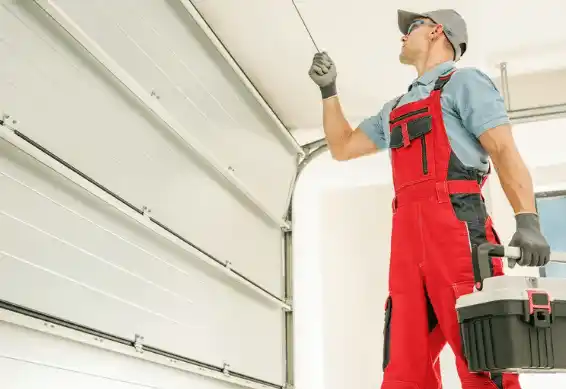
Many homeowners notice small changes before a garage door problem becomes urgent, yet it can be hard to tell which symptoms are safe to monitor and which ones require professional help. A door that becomes louder, feels uneven, or reverses unexpectedly can signal rising resistance, alignment drift, or lift support changes that continue to develop with each cycle.
Scheduling garage door repair when warning signs appear helps protect safety and reduce the chance of a door that will not close securely. Professional attention matters most when symptoms involve lift support, cable condition, opener safety response, or travel alignment. Clear timing guidance helps homeowners avoid guesswork and plan service before disruption affects access or security.
Safety Warning Signs That Should Trigger a Professional Visit Soon
Some warning signs indicate a higher safety risk because they involve uncontrolled movement, unstable lift support, or travel behavior that can escalate quickly. A door that hesitates, binds, or drops faster near the floor can indicate a balance or alignment issue that should be evaluated before heavy use continues.
Warning signs that often justify professional attention include:
- The door closes unevenly and leaves a visible gap
- The opener reverses at the same point repeatedly
- The door shakes, binds, or rubs during travel
- The door feels heavier than normal when operated manually
- Loud popping, grinding, or repeated squealing sounds appear
- The door will not stay open at mid-travel
- The door partially opens, then stops or slides downward
These symptoms can develop into garage door emergencies when the door cannot close, when vehicle access is blocked, or when the opening becomes unsecured.
For a deeper safety-focused explanation, visit our blog, “Why Is Garage Door Maintenance Critical for Long-Term Safety?”
Lift Support Issues Professionals Evaluate Before Failures Happen
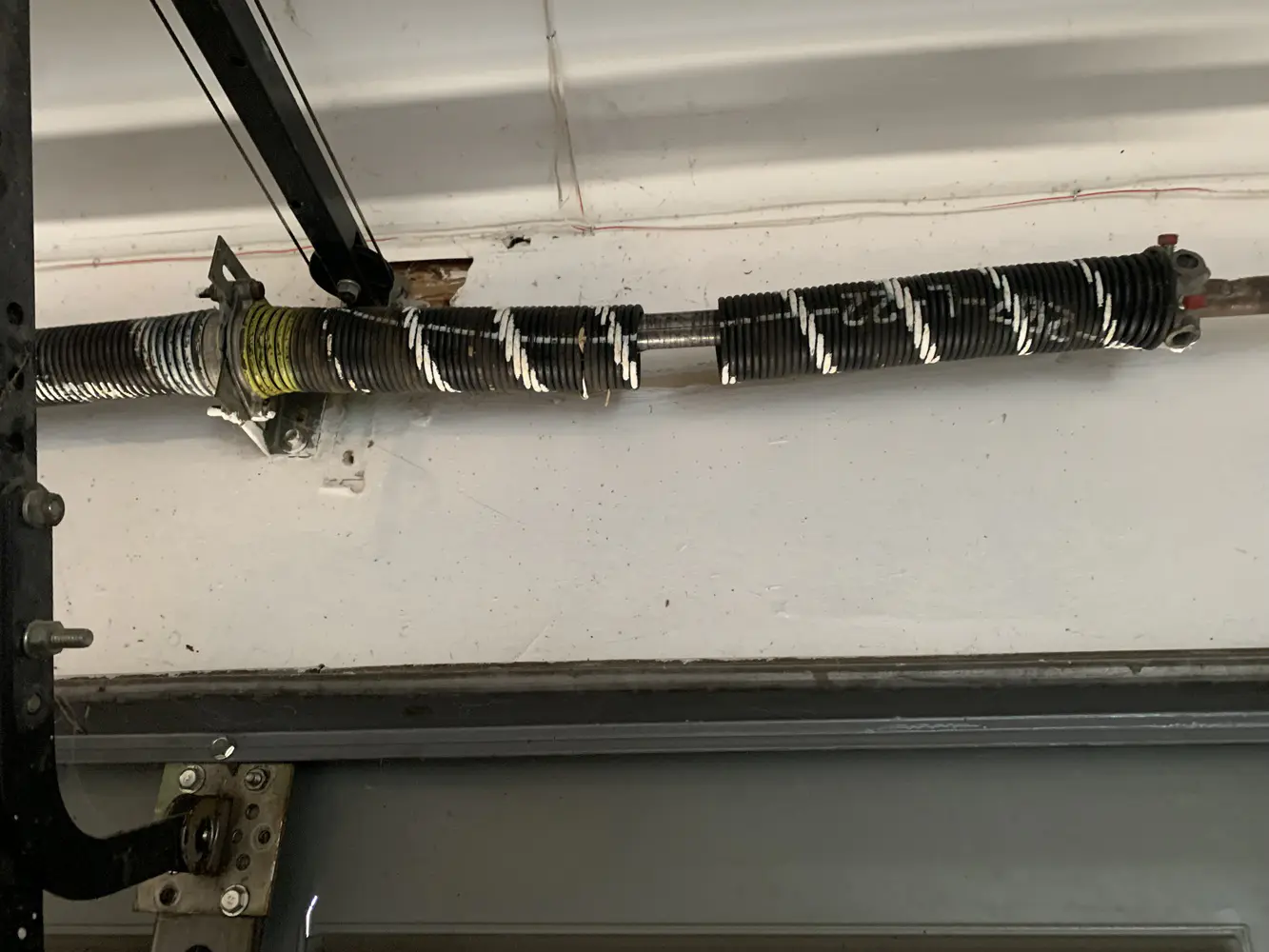
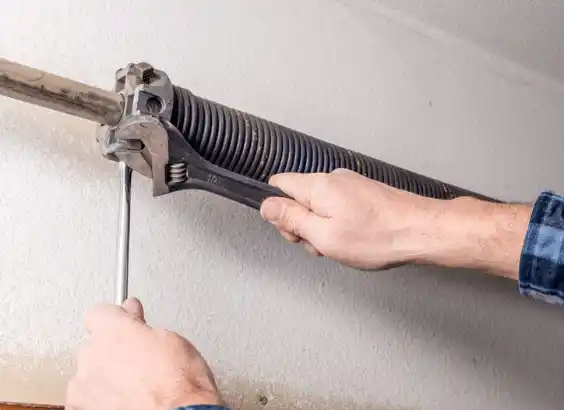
Lift support issues often require professional attention because springs and cables manage high tension and carry heavy loads. When lift support declines, the door may become heavier, the opener may strain, and travel can become less predictable.
Common lift-support indicators include:
- A heavy feel or hard-to-control movement
- Uneven rise or a door that tilts during travel
- Slack appears along the garage door cable path
- Fast travel near the floor and abrupt closing behavior
- Opener strain that increases over time
Professional evaluation often includes balance checks, cable seating review, and inspection of lift components. Lift support concerns also tie into garage door maintenance planning, since early evaluation helps prevent sudden loss of control.
For insight into how delayed service increases risk, visit our article, “What Happens When Garage Door Maintenance Is Skipped?”
Garage Door Opener Warning Signs You Shouldn’t Ignore
Garage door openers are engineered to operate with a properly balanced door that moves with minimal resistance. When friction, misalignment, or lift imbalance develops, the opener often becomes the first component to show warning signs. Changes in opener behavior usually indicate that the system is working harder than intended, which can reduce safety performance and shorten equipment lifespan if left unaddressed. Professional evaluation focuses on how the opener responds during movement and whether it is compensating for door-related issues rather than operating within normal limits.
Common opener-related warning signs include:
- Reversal without a clear obstruction
- Hesitation or pausing at the same travel point
- Inconsistent stopping at fully open or fully closed positions
- Increased motor strain sounds during lifting
When opener behavior begins to change, professionals first assess door travel resistance, balance, and alignment before making any opener adjustments. This approach ensures the door and opener interact safely, protects reversal reliability, and prevents unnecessary strain on the motor, drive components, and safety systems. Early attention helps maintain predictable operation and reduces the risk of sudden access failures.
Alignment and Track Problems That Often Need Expert Evaluation
Alignment issues often start small but can become hazardous if rollers climb, bind, or shift out of position. Track spacing drift, loose brackets, and worn rollers can also increase friction and place more stress on hinges and panels.
Professional attention is often recommended when:
- Rubbing appears at the same point in every cycle
- The door closes off-square and seals unevenly
- Rollers appear to wobble during travel
- Travel becomes jerky or noisy near track turns
Alignment issues can also increase the risk of an off-track garage door, especially when the door is forced to move while binding.
From a preventive perspective, visit our blog, “How Does Regular Garage Door Maintenance Prevent Failures?”
How Panel and Hardware Wear Causes Bigger Garage Door Issues
Garage door panels and hardware connection points carry most of the lifting and guiding load through hinges, brackets, and rollers. When wear or damage develops near these stress points, the effects often spread beyond a single component and begin to affect overall alignment. A cracked, bowed, or weakened garage door panel can alter section geometry, causing repeated rubbing during travel and increasing resistance with each cycle. Over time, these changes place added strain on tracks, lift components, and the opener.
Hardware wear concerns that often need professional attention include:
- Hinges that look tilted or loose
- Brackets that show movement or elongated fastener holes
- Rollers that appear worn or do not seat smoothly
- Fasteners that back out repeatedly
Professional evaluation helps determine whether the issue can be addressed with a targeted repair or whether broader planning is needed to restore stable operation. Identifying panel and hardware wear early supports proper load distribution, preserves smooth travel, and reduces the risk of escalating problems that can lead to uneven movement or system failure.

What Happens During a Professional Garage Door Service Visit
A professional service visit is designed to evaluate overall garage door safety, mechanical stability, and predictable movement during daily operation. The primary goal is to confirm that the door travels smoothly within safe limits while identifying wear patterns or alignment changes that could affect performance over time. Technicians assess how the door responds under normal load, whether movement remains controlled throughout the full cycle, and how supporting components interact as the door opens and closes.
A typical visit may include:
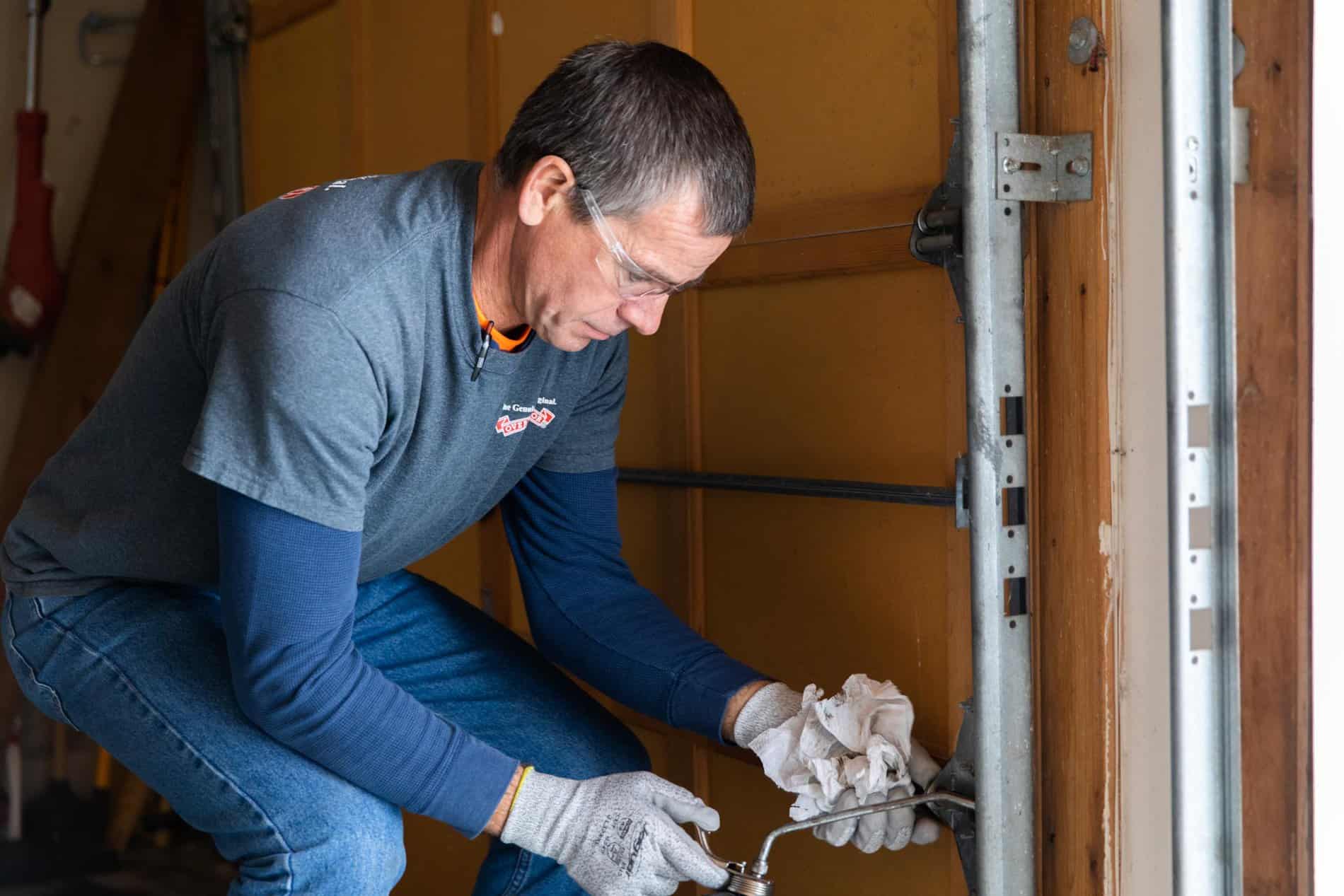
- A controlled garage door inspection that reviews the travel path and binding points
- Balance evaluation and lift behavior review
- Track and hardware stability checks
- Opener safety response and limit behavior verification
- A planned garage door tune-up is needed when adjustments are needed for smoother operation
Many homeowners describe this type of ongoing care as routine garage door maintenance because predictable service visits help maintain controlled movement, support reliable access, and lower the risk of sudden breakdowns. Consistent professional evaluations also reduce cumulative wear on lift and guidance components, helping the door operate more quietly and safely over the long term.
Maintenance Planning That Helps Reduce Surprise Repairs
Professional attention is often easiest to schedule when homeowners respond to early signs rather than waiting for a complete failure. Planning can also reduce urgency and support more predictable home routines.
Helpful planning steps include:
- Scheduling a garage door safety check when new noises or reversals start
- Using preventive garage door maintenance to keep wear patterns from escalating
- Considering garage door lubrication services when friction increases, and travel becomes louder
- Reviewing a garage door maintenance checklist with a professional to understand priority areas
- Searching for garage door maintenance near me when performance changes appear, so service can be planned proactively
When wear becomes widespread or recurring, professionals may discuss timing and options for garage door replacement. Some homeowners also consider custom garage doors when durability, insulation, or improved performance are priorities.
Choose the Safest Time to Get Professional Help
Professional attention is recommended when symptoms involve lift support, cable condition, opener safety response, or alignment drift that causes binding. Early evaluation reduces guesswork, supports safer daily use, and helps homeowners avoid urgent access problems that disrupt schedules. Precise inspection results also help homeowners plan the most practical next step, whether that is a targeted repair, a tune-up, or a broader service plan.
MF Solutions Inc helps homeowners choose the safest time to schedule service by evaluating lift support, cable condition, opener safety response, and alignment drift that can lead to binding. Our technicians reduce guesswork by providing clear inspection results that support safer daily use and help limit urgent access issues that disrupt schedules.
Contact us today or call now to schedule an evaluation and review the most practical next step, whether that involves a targeted repair, a tune-up, or a broader service plan.