
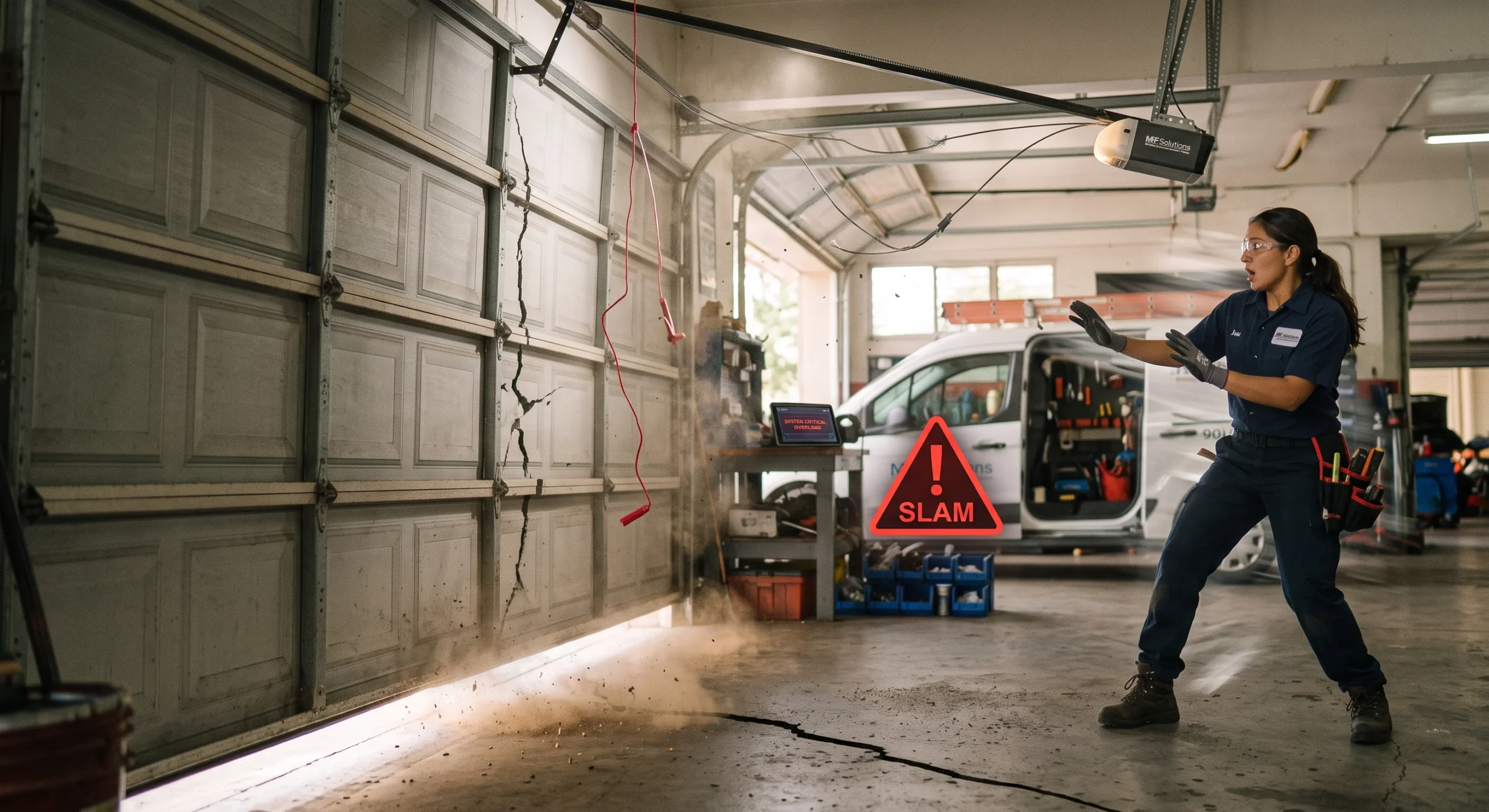
door’s weight during closing, causing the door to drop faster than normal. Even a properly working garage door opener may struggle to guide movement safely when springs, cables, or lift hardware lose support.
This sudden drop can signal serious garage door problems that may lead to property damage or a dangerous situation if the operation continues. Knowing what to do next when a garage door slams shut helps you respond safely, understand what likely caused it to fail, and plan for professional service.
Why Did My Garage Door Slam Shut All of a Sudden?
A sudden slam usually means the door’s counterbalance system is no longer controlling the door’s weight during closing, so the door drops faster than normal and can create a dangerous situation.
Common reasons this happens include:
- A broken spring that removes support from the door weight and lets the force of gravity take over
- A garage door spring broken condition that creates uneven stress across the lift hardware
- A garage door cable snapped on the side of the door, causing the side of your garage door to drop first
- Rollers bind in the horizontal tracks, then release and cause a sudden drop
- Opener settings or opener’s force settings are applying too much force when the system is already out of balance
To understand these failure triggers and why the situation is considered urgent, read our guide on Garage Door Slams Shut: What It Means and Why It’s Urgent, which explains what the sudden drop signals inside the entire garage door system.
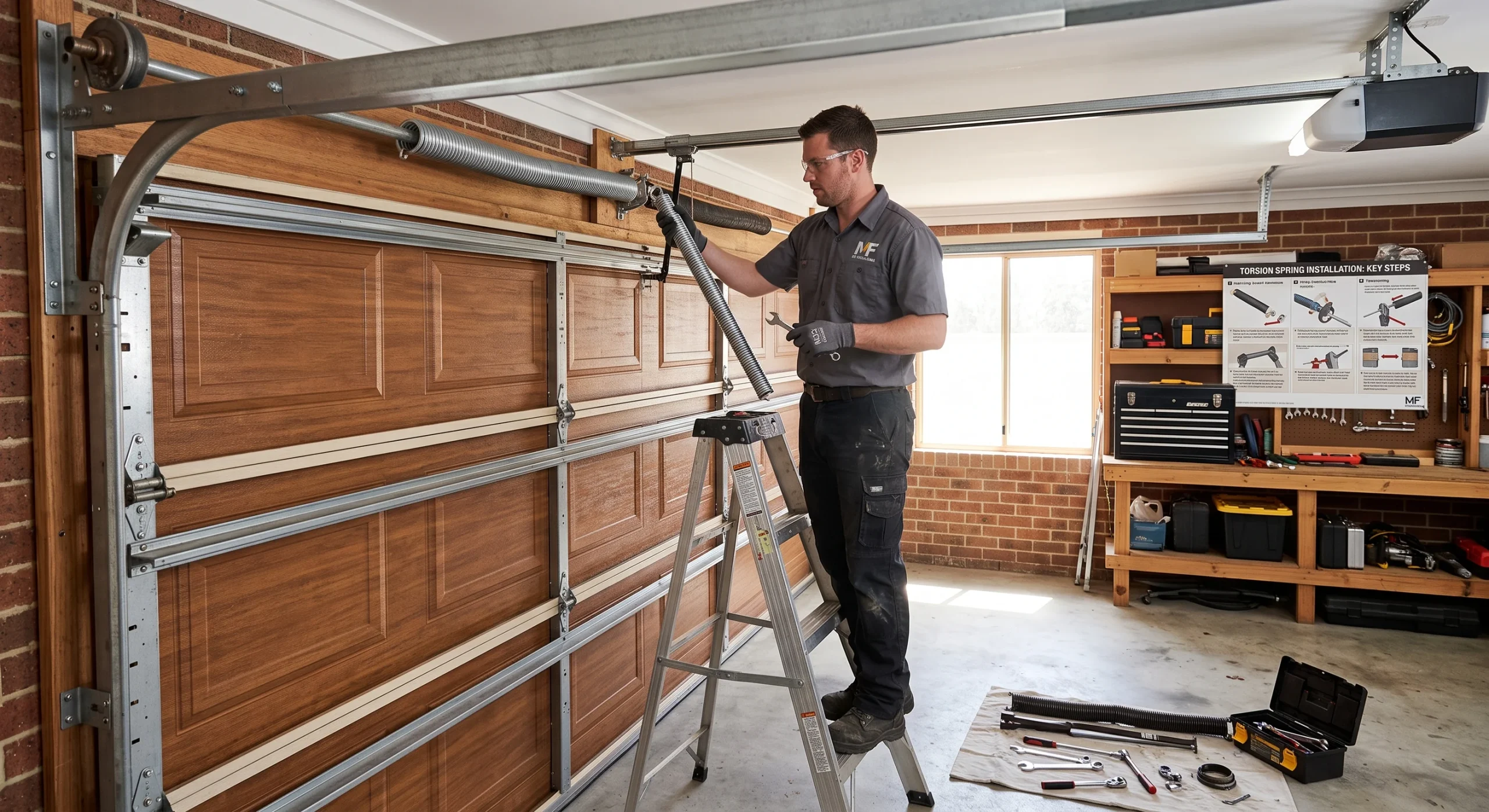
Immediate Actions Homeowners Can Take After a Garage Door Slams Shut
Stop Operating the Door Until the System Is Inspected
Stop all operations immediately and keep the system idle to limit added strain on lift hardware and reduce the risk of another sudden drop.
Immediate actions to take:
- Stop pressing the wall button or remote
- Keep remotes out of reach, so no one restarts a cycle
- Avoid lifting, pushing, or pulling the door by hand
- Leave the door in its current position until service arrives
- Schedule an inspection so a repair plan can be confirmed
UL Standards & Engagement explains that UL 325 requirements are designed to reduce closing-cycle hazards and improve entrapment protection in automatic door operation.
Check If the Garage Door Closes Too Fast or Moves Unevenly
Careful observation from a safe distance helps you report what happened clearly without forcing movement or increasing risk.
Safe checks to complete:
- Stand outside the travel path and away from the door opening
- Watch one cycle only if the door moves smoothly without resistance
- Note whether one side drops faster than the other
- Write down where speed changes happen, such as mid-travel or near the floor
- Share the notes during scheduling and again at arrival
Accurate notes help the technician focus the inspection on the most likely failure point first.
Observe Whether the Door Appears Out of Balance
A visual balance review helps confirm uneven loading while keeping hands away from parts that may be under high tension.
Simple steps to follow:
- Step back and check whether the bottom edge looks level to the floor
- Keep your hands away from springs, cables, drums, and brackets
- Take a straight-on photo of the door’s position
- Photograph both sides to capture tilt or misalignment
- Keep images ready to share if the service team requests them
Photos help speed up diagnosis by capturing door position and alignment without adding risk.
Keep the Area Clear to Prevent Injury or Property Damage
Clear the opening and the nearby floor area so no one is exposed if the door drops again or shifts unexpectedly.
Safety actions to complete:
- Keep children and pets away from the opening and track area
- Block walking paths so no one passes under the door
- Remove items near the floor that could be struck or crushed
- Use another entry point until the door is serviced
- Move vehicles only if the door is fully open and stable
The Chamberlain Group explains that properly aligned safety sensors help prevent the door from closing when the beam is interrupted, keeping the doorway clear during unsafe operation.
Document What Happened for a Faster Service Visit
A short written and photo record of the event helps the technician connect symptoms to likely failure points and arrive prepared.
Details to capture quickly:
- Write down what you heard, such as a snap, scrape, or heavy impact
- Note whether the issue started during opening or closing
- List any recent changes, like new noises or slower travel
- Take photos of visible gaps, slack cable areas, or shifted hardware
- Keep notes handy to share during the inspection
Clear documentation improves diagnosis speed by tying the failure moment to the parts that likely absorbed the load.
What Happens Inside the System When a Garage Door Closes Too Fast
Closing speed changes often occur when the spring system fails to properly balance the door’s weight, forcing other parts to absorb uneven stress during travel.
Key system changes that follow:
- Springs lose lift support, shifting the door’s weight into cables and drums
- Tension spikes across metal components, raising the risk of premature failure
- Track friction builds up in horizontal tracks, which can trigger a sudden drop point
- Opener settings and force settings may overcompensate and push the door with too much force
- Safety features can misread unstable travel and interrupt normal closing cycles
Unstable closing speed usually indicates weakening lift support, so scheduling garage door spring service helps restore controlled travel before the garage door slams shut again.
Common Failure Scenarios That Trigger a Sudden Drop
Sudden drops usually happen when the door’s counterbalance system loses control of the garage door’s weight, and the load shifts into the lift hardware, which cannot stabilize travel.
Common failure scenarios include:
- Broken garage door spring that releases stored tension and removes the lifting support
- The garage door cable snapped on one side, pulling the door out of level and speeding up the descent
- Drum misalignment that causes uneven cable wrap and uneven stress across the lift system
- Roller or hinge bind in the horizontal tracks that release suddenly and trigger a drop point
- Opener’s force settings are applying too much force against abnormal resistance and worsening the slam
Mechanical triggers and how they develop under Buffalo Grove conditions are covered in our blog on What Causes a Garage Door to Slam Shut in Buffalo Grove?, which explains the system failures technicians check first.
What a Professional Will Inspect When a Garage Door Slams When Closing
Professional diagnosis focuses on the lift and control parts that manage the door’s weight, closing speed, and safe travel through the garage door system.
A technician will typically inspect:
- Garage door springs for gaps, metal coil fatigue, and spring tension balance
- Lift cables, bottom brackets, and drums for fraying, slack, or misalignment
- Track alignment in the horizontal tracks, plus roller and hinge wear that causes binding
- Opener settings, force settings, and the safety features that manage closing behavior
- Signs of damage across the panels and hardware that point to uneven stress or overload
Component-level inspection priorities are detailed in our blog on Which Parts Fail When a Garage Door Slams Shut?, which explains what technicians evaluate when slamming becomes a recurring issue.
How Repairs Are Typically Prioritized After a Slam Shut Incident
Repair priority starts with restoring a safe counterbalance to control the door’s weight before any performance tweaks are attempted.
Typical repair order includes:
- Stabilize the spring system so the door weight is balanced and travel is predictable
- Replace stressed lift parts like cables or drums if uneven stress causes wear or slippage
- Correct track and roller issues in the horizontal tracks to prevent binding and drop points
- Reset opener settings and force settings only after the door moves smoothly by design
- Verify safety features and full-cycle movement so slamming does not return
Restoring safe balance first and correcting stressed lift parts is the most reliable path to prevent repeat drops, which is why professional garage door repair is the right next step after a slam.
How Professional Maintenance Helps Prevent Another Slam Event
Ongoing service helps keep the door’s counterbalance system stable so closing speed stays controlled and the door does not drop under the force of gravity.
Maintenance work often includes:
- Check garage door springs for signs of wear, spring issues, and metal coil fatigue
- Inspect cables and drums for moisture exposure, fraying, and uneven stress buildup
- Align horizontal tracks and verify rollers move freely without binding
- Confirm opener settings and safety features respond correctly during a normal cycle
- Test balance so the door’s weight stays supported across the entire system
Regular garage door maintenance helps prevent a slamming garage door by keeping the entire garage door system balanced, supported, and controlled during every closing cycle.
Get Control Back After a Garage Door Slams Shut
A garage door slams shut when the door’s counterbalance system can no longer control the garage door’s weight during closing. Fast action helps limit property damage and reduces the risk of serious injury if unstable movement happens again.
MF Solutions serves Buffalo Grove, IL, with expert technicians who provide professional diagnosis and reliable garage door repair for spring issues, cable failures, and related hardware strain. Contact us or give us a call today to schedule an inspection and get your door operating safely again.